The story of Whistler is a story about place, people and an Olympic Dream
John Millar, short, shabby, grizzled, a gregarious Texan with a
Texas-size swagger, liked company when he ate. Liked to talk. Liked it
even better when someone was around to listen, because Lord knows,
there were not too many ears around the cabin where he trapped. In the
dark interior of the Horseshoe Bar and Grill in downtown Vancouver in
1911, he found a pair of willing ears, on the cook, another American
from Brooksville, Maine by the name of Alex Philip.
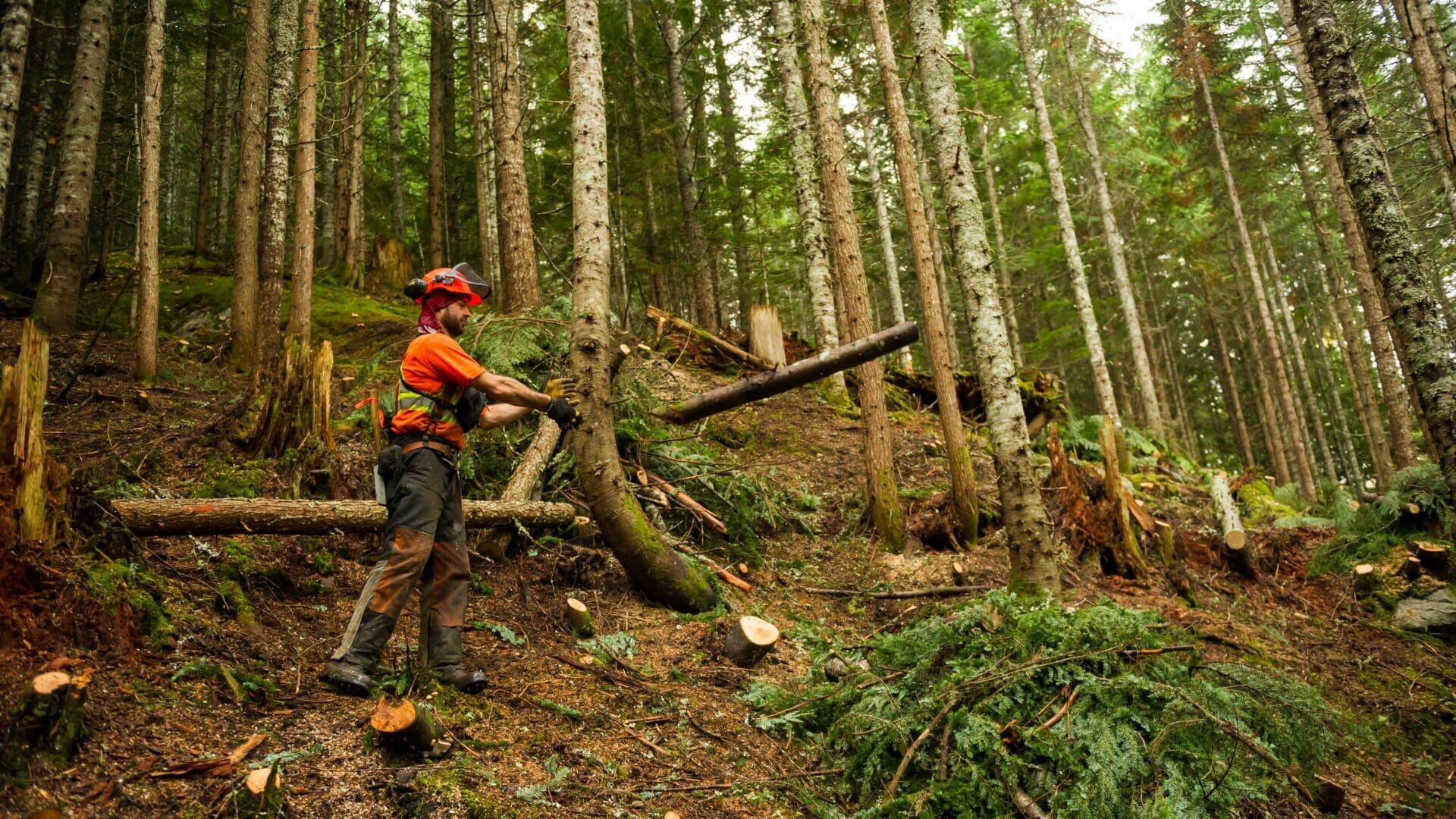
Millar told Philip about the land where he lived: a small, secluded valley nestled at the base of towering, glacier-capped peaks of the Coast Mountains, only 40 miles inland from the Pacific as the eagle flies; the slopes choked with virgin cedar and hemlock and Douglas firs so wide and so tall it took you pretty near a day to chop one down. Rivers running clear and cold and a string of sparkling lakes "with so many hungry fish, ya had to beat 'em off your line with a stick".
The land around the small chain of lakes had been inhabitated for thousands of years by the Coast Salish First Nations. The valley itself was an isolated wilderness, frequented by the Lil'wat and Squamish Nations. A trail linking Pemberton to the Pacific was opened in 1877, attracting prospectors and trappers like Millar.
Mesmerized by Millar's tales, Alex Philip brought him home after work to meet his wife, Myrtle. And when Millar suggested they take a look-see, Myrtle and Alex Philip agreed. They made their way that August, first by steamship to Newport (later called Squamish), then buggy to Brackendale, followed by a two-day hike with pack horses to the northwest shore of Alta Lake. Here. Here, in this isolated Canadian wilderness, would be the perfect place to open a fishing lodge.
It started with a fishing lodge
The trout were biting the second weekend in May, 1914, when 22 fishermen paid 40 cents a night to stay at the new Rainbow Lodge. By October, the Pacific Great Eastern had pushed its service all the way to Pemberton. Over the next several decades, other enterprising folks, some satisfied customers of Rainbow Lodge, moved to Alta Lake to open a tea house, or hotel, or work at the mills. Millar headed further north when the railway came in, saying it was too darn civilized, but people like Grace Archibald, Hugh Lorimer, Russell Jordan, Alfred Barnfield, Jimmy Fitzsimmons, Agnes and Bert Harrop, Dick and Doreen Fairhurst, and Myrtle's brother Philip Tapley, turned the isolated valley into a lively, sociable community, with Saturday night dances at the lodge, fishing, boating, picnicking, hiking, exploring, skating, snowshoeing and that new sport - skiing. By the time the Philips sold Rainbow Lodge in 1948, it had become the most popular honeymoon destination west of Jasper.
Born for the Games
In 1960, a group of Vancouver businessmen skiing Squaw Valley, host of that year's winter Olympics, had a brainwave. Vancouver, and the mountains north of it, would be a perfect place to hold the '68 Games. They began a search for suitable terrain, but one, Norwegian Franz Wilhelmsen, already knew the ideal location. He was nuts about skiing and he spent many weekends at Alta Lake, to rise at five in the morning, hike through thigh-deep snow to the top of Whistler Mountain, watch the dawn turn the craggy face of Fissile a soft, pale rose, then ski down. It was exhausting and exhilarating, and it only needed a chair lift to make Wilhelmsen's life complete.
Proposals were submitted, rejected, modified, researched, rejected again, financed and finally, lift construction began in 1965. Whistler didn't host those winter Games, and failed in the next bid attempt too, but the vision was always crystal clear: a world-class summer and winter resort, skiing in wide-open bowls and on long, treed trails in winter and fishing and hiking in summer, with a commercial area to service the multitudes who were sure to come. The Garibaldi Lift Company opened the Gondola, Big Red Chair and two t-bars on the west side of Whistler Mountain on February 15, 1966. The province finally blacktopped the old hydro service road from Squamish. The valley population was 527.
Becoming a resort municipality
The real estate rush was on. More cabins went up and new subdivisions were created - 600 new lots in Alpine Meadows, another several hundred in Emerald, despite the fact that there were no sewers, no building codes, no fire protection, no police force and no planning. The provincial government slapped a freeze on all land development in 1974, so that residents, regional district board members and provincial ministers could catch their breath and decide how to proceed. Whistler needed a local government, but one that recognized its unique character and its potential to become a year-round resort. The answer was the Resort Municipality of Whistler, incorporated on September 6, 1975, as the first designated resort municipality in the country.
Locals made plans to launch Whistler into the international marketplace. They had architects design a pedestrian village at the foot of Whistler and Blackcomb Mountains, right over the town's garbage dump. Al Raine, then the provincial coordinator for ski development, called for proposals to develop a sister ski area on Blackcomb, eventually won by Fortress Mountain Resorts of Alberta, a subsidiary of the Aspen Ski Corporation.
The Garibaldi Lift Company committed to building three-stage lift access up the north side of Whistler. The resort association was created to sell Whistler to the world. And when the village and Blackcomb opened for business in December 1980, the world came. The planners and builders of Whistler Resort enjoyed the same speedy success that Myrtle and Alex Philip did with Rainbow Lodge. Times were lean in the early 80s, but by 1986, construction resumed in the village and both mountains, under new ownership, started impressive expansion plans.
A summer destination
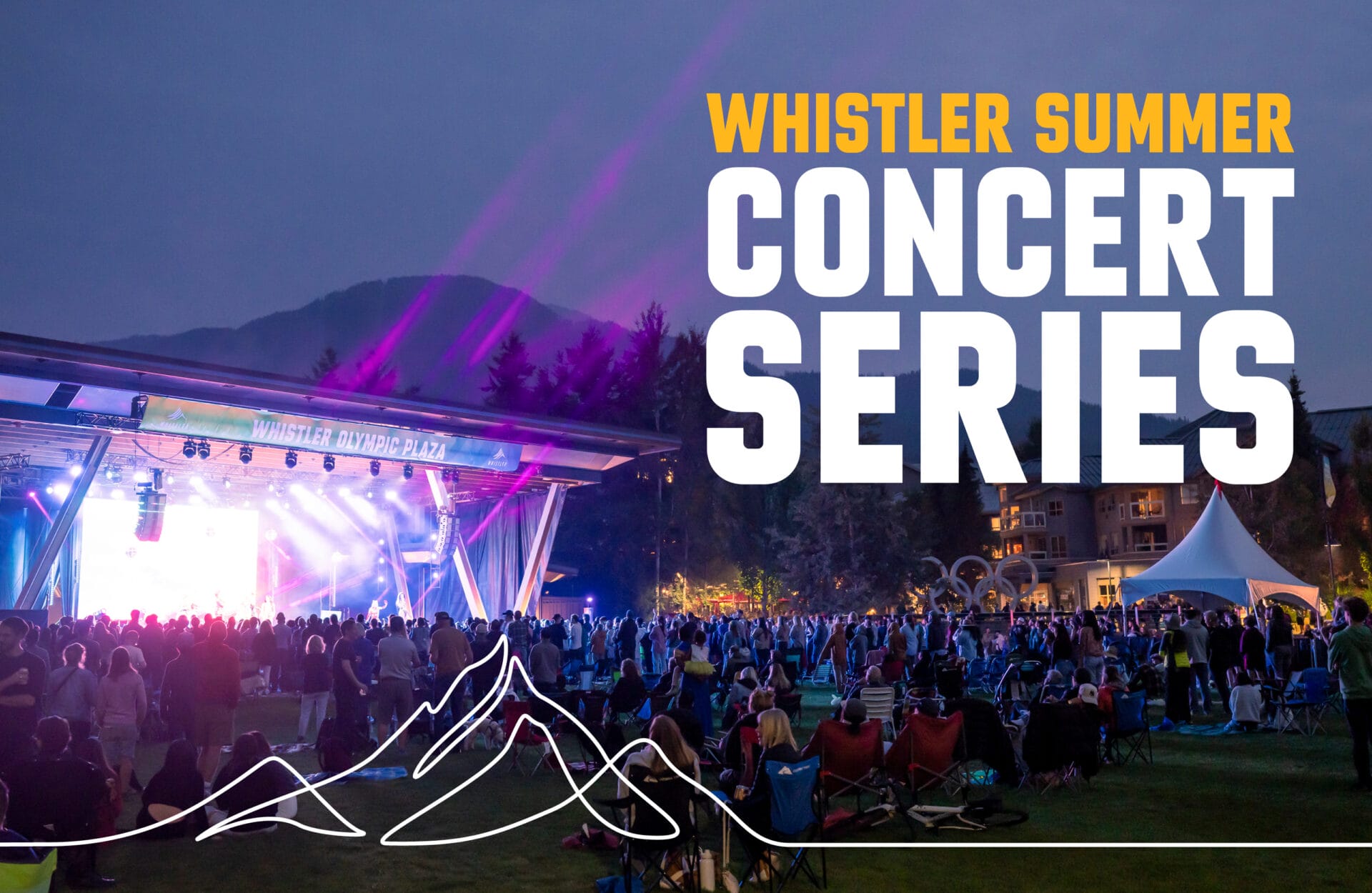
Locals began to plot another strategy that would extend the resort's business through the spring and summer. The strategy involved a careful mix of summer amenities that fit the mountain landscape, like golf and hiking, and a line-up of art, concerts and festivals. It worked. Since 1989, the accolades have poured in. Best resort design, best skiing, best golf, best snowboarding, best hotel, best place to kiss. By the new millennium, annual visitation surpassed 2 million, with summer visitors exceeding winter and the permanent population had grown to 9,500.
2010 Winter Games - "a dream come true"
Most fittingly, after a third attempt, on July 2, 2003, more than 5,000 residents gathered in Village Square to cheer Jacque Rogge, the president of the the International Olympic Committee telecasting live from Prague, as he announced Vancouver/Whistler as the host of the 2010 Winter Winter Olympic and Paralympic Games.
The Philips lived on in Whistler after they sold Rainbow Lodge. Alex died in 1968, but Myrtle lived to see the village built and the resort grow. "To see it all so changed now "it's like a dream," she said.
|