Looking to get caught up on the latest from Council? We’ve pulled together some key stories from the December 16, 2025 Committee of the Whole and Regular Council meetings, including:
- Council passes 2026 Budget guidelines
- Staff outlines climate recommendations to reduce emissions
- Council endorses the Whistler Creek West Neighbourhood Plan
For all the details, find council reports and video recordings of the full meetings at whistler.ca.
Council passes 2026 Budget guidelines
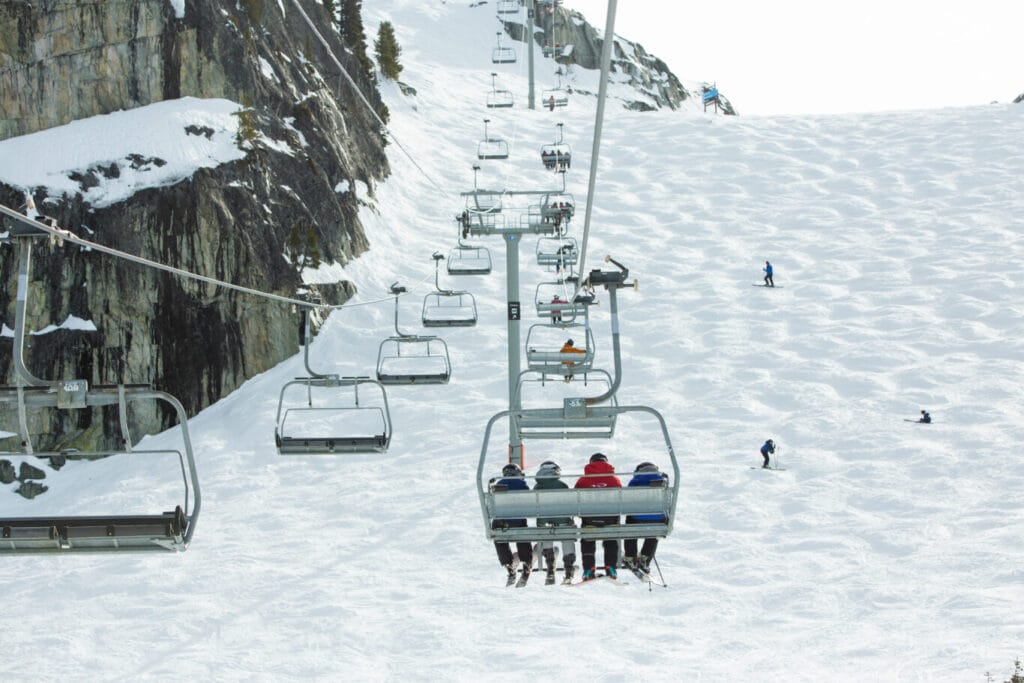
Council on December 16 approved guidelines for the 2026 municipal budget, the culmination of months of work to arrive at a budget that invests approximately $102 million in projects, services and amenities for the Whistler community.
Ultimately, Council passed a 6.9-per-cent residential and commercial property tax increase; a 10-per-cent increase to sewer parcel taxes and user fees; a nine-per-cent increase to water parcel taxes and user fees; and a three-per-cent increase to solid waste parcel taxes and fees.
In an effort to more fairly distribute the costs of tourism, Council also approved a redoubling of the mill rate for Class 8 recreational properties, representing major tourism operations such as ski areas and golf courses. The new mill rate will bring the percentage of tax contributed by Class 8 operators from three to five per cent of total tax revenues.
Council will consider the Five-Year Financial Plan Bylaw in January.
Read the full report here. Learn more about the 2026 budget here.
Staff outlines recommendations on climate action in progress report
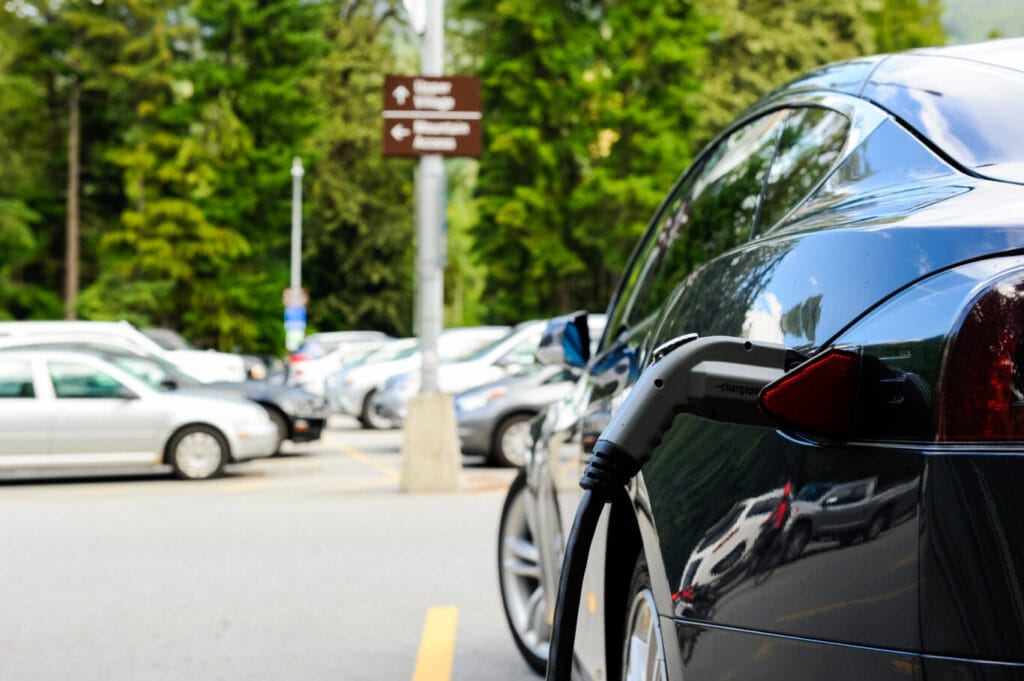
Municipal staff proposed several recommendations as part of an update on Whistler’s climate action progress at the December 16 Council meeting.
Climate and Transportation Planner Maria Thorlakson presented a list of priority actions, with associated timelines and budget considerations, aimed at reducing Whistler’s greenhouse gas (GHG) emissions and moving the community closer to its 2030 climate targets.
The community-level priorities, outlined in the table below, include future implementation of regional transit and continuing to expand local transit; erecting secure bike parking and bike shelters; and increasing the total number of publicly accessible electric-vehicle chargers.

By implementing these priority actions, it is possible to reverse Whistler’s increasing GHG emissions trajectory (since 2007) and make progress towards the community’s 2030 target. However, without drastic intervention beyond these measures, and further action from the provincial and federal governments, as well as the private sector, Whistler is unlikely to achieve its 50-per-cent reduction target in the next five years.

The report also outlines recommended priority actions for the organization to reduce our own corporate GHG emissions. These include purchasing electric vehicles for the RMOW fleet when replacements are required, and energy retrofits at both the Meadow Park Sports Centre (MPSC) and the Wastewater Treatment Plant.
Both the electrification of RMOW’s light duty fleet vehicles and the proposed energy retrofit at the MPSC have a high GHG impact relative to other RMOW corporate actions. However, their impact is small in comparison to the recommended community-level priority actions. The RMOW’s corporate emissions represent approximately two per cent Whistler’s overall GHG output.
Council adopted two optional recommendations from staff: a commitment to prioritizing electric vehicles in 2026 and 2027 RMOW fleet replacements, as well as review our procurement process to prioritize municipal contractors with low GHG emissions.
Read the full report here.
Council endorses Whistler Creek West Neighbourhood Plan
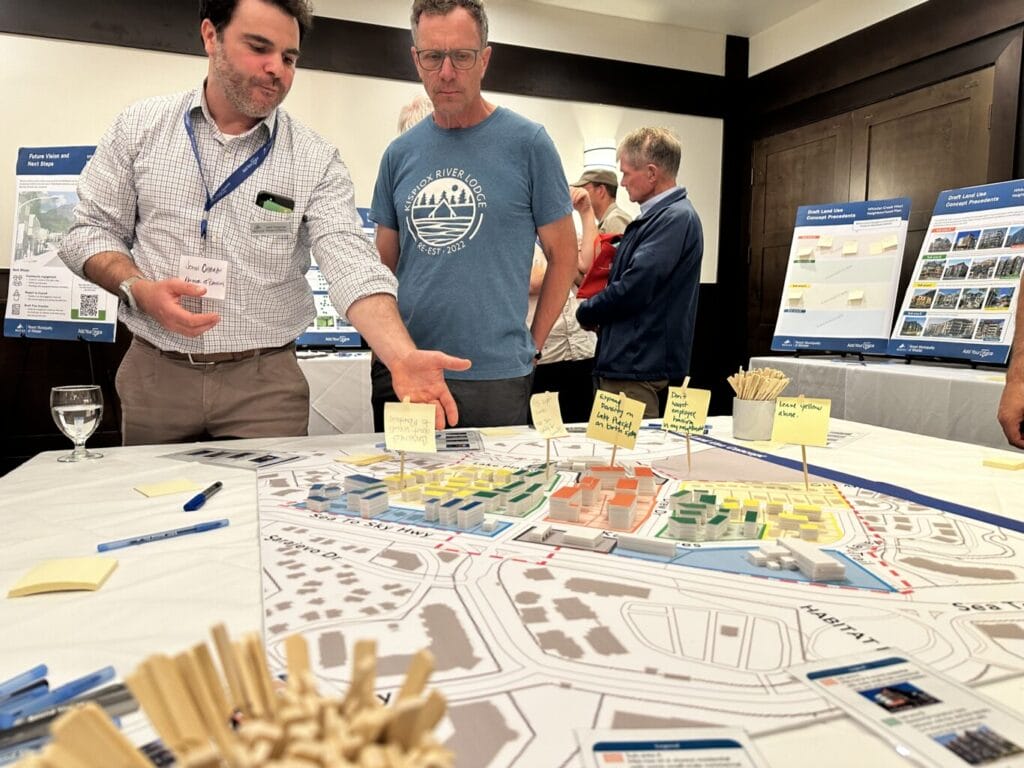
Council endorsed a neighbourhood plan for Whistler Creek West, the result of extensive public engagement that will see Creekside evolve to meet the needs of a growing community.
The plan establishes a vision for a vibrant neighbourhood, which recognizes Whistler’s community values and reflects the historic legacy of the area. It includes a land-use concept that is divided into four sub-areas. Each sub-area describes proposed uses, a range of building storeys and density, and building types that will be used to inform future zoning amendment bylaws.
To view the plan, and read the full report, click here.
Council hears back on small-scale multi-unit housing bylaw testing
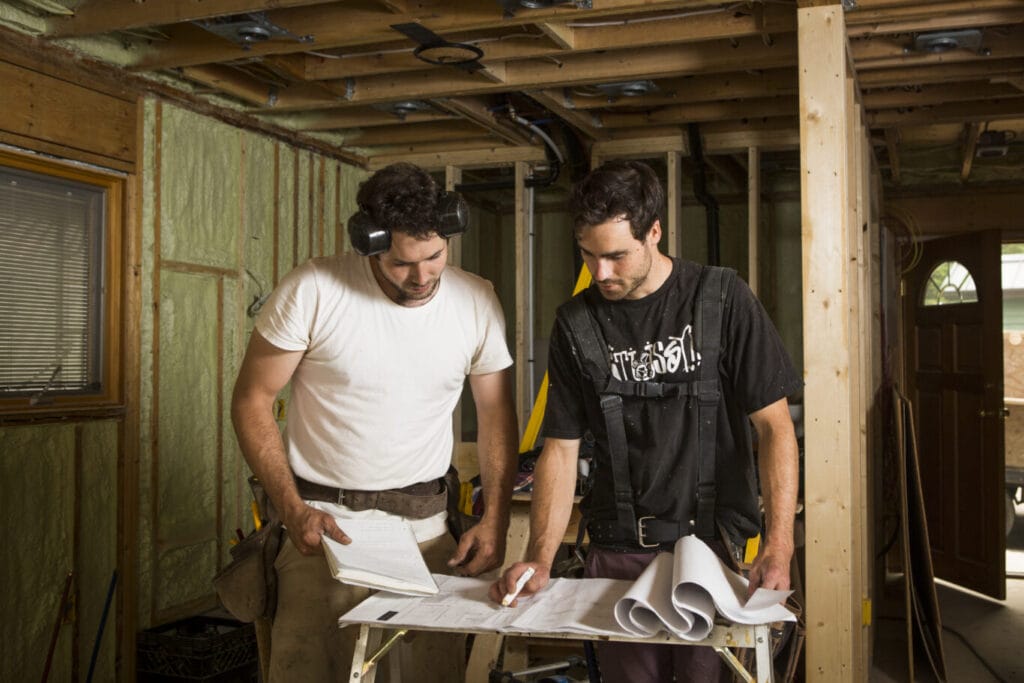
At the December 16 Committee of the Whole meeting, municipal staff presented the results from preliminary testing of a comprehensive housing bylaw amendment planned for 2026.
Provincial Bill 44 required local governments to amend zoning bylaws by June 30, 2024 to allow for the creation of more small-scale multi-unit housing (SSMUH) for middle-income earners, such as row homes, triplexes and townhouses.
As part of that process, RMOW staff applied the new regulations to actual potential development scenarios with local architects, builders and real estate professionals to assess their practicality, financial viability and potential uptake of SSMUH development opportunities.
Two separate teams completed scenario testing, while certified land appraisers from Ryan, ULC, conducted the financial feasibility analysis.
Informed by those findings, staff had several recommendations intended to support more successful implementation, including:
- simplifying and integrating SSMUH provisions,
- simplifying and recalibrating density rules,
- allowing for increased building height and site coverage,
- improving communication and clarity on SSMUH provisions.
“We’re understanding how [the new bylaw] works and doesn’t work for us. Honestly, right now, I genuinely think we’re seeing success,” said Dale Mikkelsen, GM of Climate Action, Planning and Development Services. “It’s an opportunity to provide housing for people that live and work in this community, in neighbourhoods where they were likely not going to end up. So, it reanimates our neighbourhoods.”
So far, we have received 18 applications for SSMUH development, for a total of 38 units.
Read the full report here.
To attend an upcoming meeting, check out the Council meeting Schedule. Agendas and Minutes are available online. To connect with Council, consider Borrowing a Councillor from the Library’s Unusual Items Collection, or get in touch with them individually by phone or email.