
James Hallisey, our longtime GM of Infrastructure Services, concedes that the hiring process was a bit different when he first joined the RMOW in 2002. Back then, when he was hired as a capital projects engineer, his interview with the Manager of Transportation at the time consisted of a handful of questions and lasted all of maybe 20 minutes.
“He rolled some drawings out on the desk and said, ‘Do you understand these, James?’ I said, ‘Yeah, that’s what I do every day. ‘Oh.’ Rolls those up. Then asks, “Well, what do you think about living in Whistler?”
A brief chat about his love of mountain biking ensues. “’Well, that’s great,’” the manager said. “You can start in a month.’”
And with that brief interview, a nearly 25-year career, spanning some of the most consequential infrastructure projects in Whistler’s history, began.
With James retiring at the end of October, we sat down with him to reflect on a remarkable career, discuss the infrastructural opportunities and challenges facing Whistler, and how best to communicate the important technical work of his department to the public.
The following interview has been edited for length and clarity.
What were some of the early projects you worked on?
I did a landfill expansion project when I first got here. The sewer pump station in Alpine was one of my first projects. It was a whole variety of stuff, which was awesome. I built the Sunridge reservoir, so I got exposed to all kinds of different infrastructure around Whistler. And some of those nooks and crannies I haven’t been to in 20 years now.
Then in 2004, we were awarded the [2010 Olympic] Games. We had all this stuff to do before 2010, and it was a really unique situation where you had a super long, but fixed, deadline: February 10th, 2010. We’re six years away and we’ve got a lot of stuff to get done. So we were just flying at it, and I was project manager. It was pretty fun. We weren’t scrimping on budgets. They’re like, ‘We just need to get it done. Tell us how much it costs.’ And the money was there.
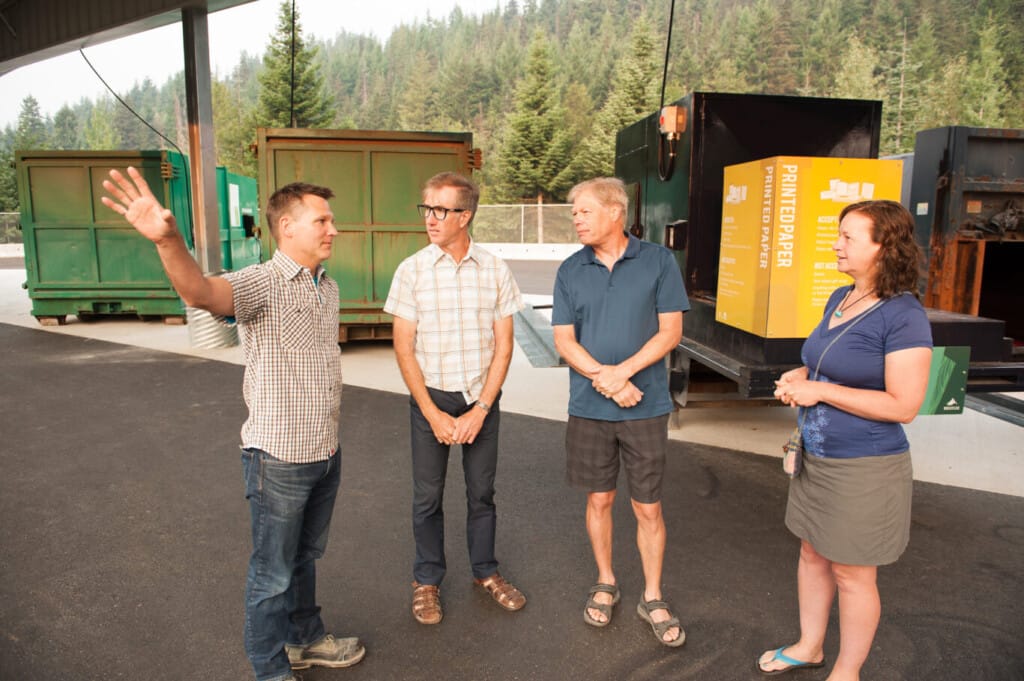
We closed the landfill because we were going to build the Athletes’ Village on top of it, and that was one of my projects to manage. We built the transfer station down in the Callaghan. That was one of my projects as well. Built the debris barrier on Fitzsimmons Creek, because that was part of the deal with the Province for them to give us the Day Lots because they weren’t Vail or Whistler Blackcomb parking lots at the time. They were all dirt and potholes and mud until then. It’s hard to imagine looking at it now. It’s crazy.
Was it easier to get projects through in that lead-up to the Olympics? How did it differ from today?
They bumped the staff authorization limit up to a million dollars, so anything under a million, you didn’t have to take it to Council because we just had to get it done. I still had quite a few projects that I took to Council, but it wasn’t as much. As the project manager, it was interesting to have this super firm deadline to get things done, and the authorization to do whatever you needed to get it done.
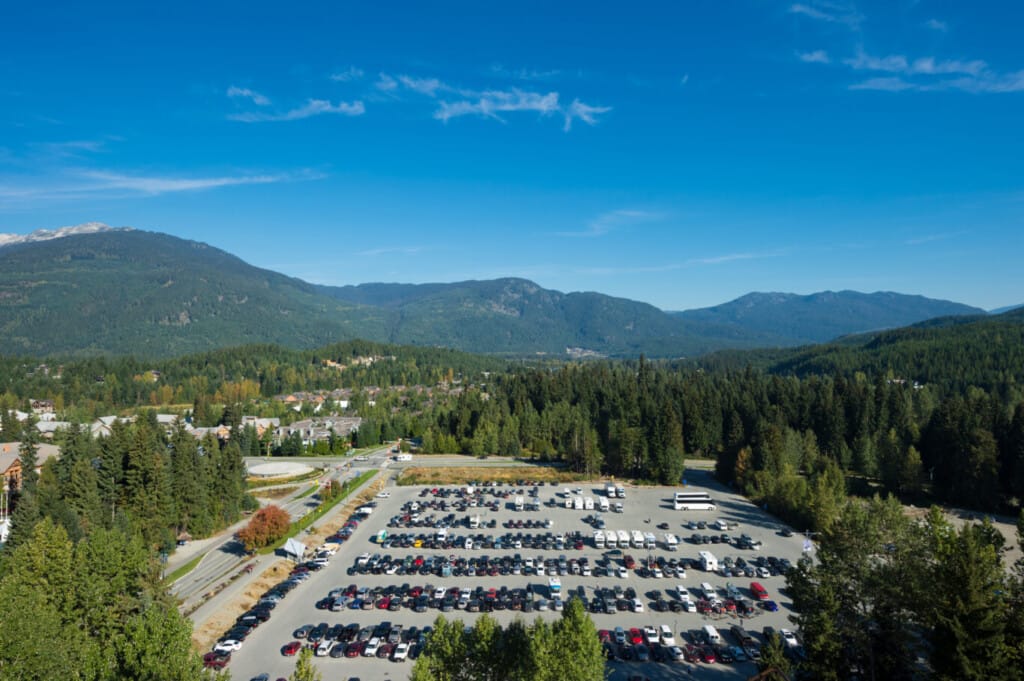
You mentioned the Day Lots and introducing pay parking, which was not popular at all with residents at the time.
It essentially got the Mayor and entire Council voted out back in 2011, and it took us eight years to get back to the point where we could convince the public that, you know, this was actually a good way of doing things, and there’s benefits to it. We took our time to explain that to people and organize things, communicating that the Day Lots now pay for all the high school students to have free bus passes. Once you put those things together, people start to get it. Infrastructure work can fly under the radar, but it’s vital for a functioning community.
How do you convince the public of the importance of this work, which can be pricey and highly technical?
That Day Lots example from 2010 was super good learning, and I think we did pick it up after the fact. That was too much, too fast. Sometimes you have to be a little bit more patient. More recently we have been more patient.
We have the once-through cooling bylaw, which we first tried in 2008, and the councillors were not ready to take that step. They [thought] it was going to be too hard for our hotels to do. We waited a decade. We came back. We planned it better. We did our outreach better. We have a Comms team that’s better at doing the outreach. All those things, and this time, we were successful. We explained the problem so that people could actually understand it.
But yeah, when you rush it, you don’t bring everyone along with you. It’s not going to work. And it’s been interesting for me because my training is all technical, and I’ve got lots of friends that are super high-tech engineers, and I still find this super satisfying because, this is how things actually get done. It doesn’t matter how good your technology is if nobody believes it. It’s just going to sit there, not going anywhere. You need to have the political side and the communication side and bring everyone along, and that wasn’t what I expected when I started this job at all, and it’s still super interesting how you have to do all those pieces to make it work.
I’ve always been impressed with your ability to convey complicated, technical concepts in a clear and simple manner. Is that a skill you’ve always had or did you develop it along the way?
I think I had some of that from the beginning. From listening and probably just from being observant, because you do hear others that go into their acronyms or whatever, and it feels like, ‘You’re leaving everybody behind. Nobody’s getting this stuff.’
Chris Vick asked us what our superpower is in our GM meeting and right away, I said I think my superpower is English-to-English translation, which sounds silly. But there are so many times where I’m sitting in conversation, and both sides are speaking English, but they’re not understanding each other at all.
Whistler is growing quickly and much of its infrastructure is reaching the point where it needs a refresh. What do you see as the opportunities and challenges facing Infrastructure Services in the future?
I think with our water, sewer, and solid waste, the fees and charges, I think we can manage that pretty effectively with reasonably small annual increases, like we have been. We’ve been the recipient of some pretty decent grants along the way.
Most recently, we got around $7 million for the water supply update down in Cheakamus Crossing. As long as there are a few of those that come down the pipeline, I think we’re in pretty good shape there. But the other portions that are just general tax funded, like roads and recreation and things like that, when I look at what we probably need to do over the next 20 years, it looks like a challenge. There needs to be some outside funding source. Raising taxes for that is not going to be tenable.
I’m sure it was tough when you let your team know of your retirement. How would you describe your style as a leader and mentor?
At this level, I’m not doing much except trying to make sure that they can get their work done, and hopefully, they all understand I’m here to try and support them and make their work go smoothly. So that’s the way I’ve approached it.
But you’re right; it made telling people what’s coming hard, and it’s been in my head for a while. When it came down to actually making it real and telling people the date I’m leaving and I’m gonna stop being here, I took a bit of a breath.
It wasn’t easy. I knew that it wouldn’t be, to some extent, but I was a little surprised just how much emotion that created.
What’s next for you?
The Italy vacation was planned even before the retirement date was worked out, and then it all converged. Generally I’m not planning on going anywhere except from my house to the ski hill and my house to the lakes and my house to the trails.
I’m not rushing back into work or anything. I might take on some consulting in time, but I’ll give that a few months.