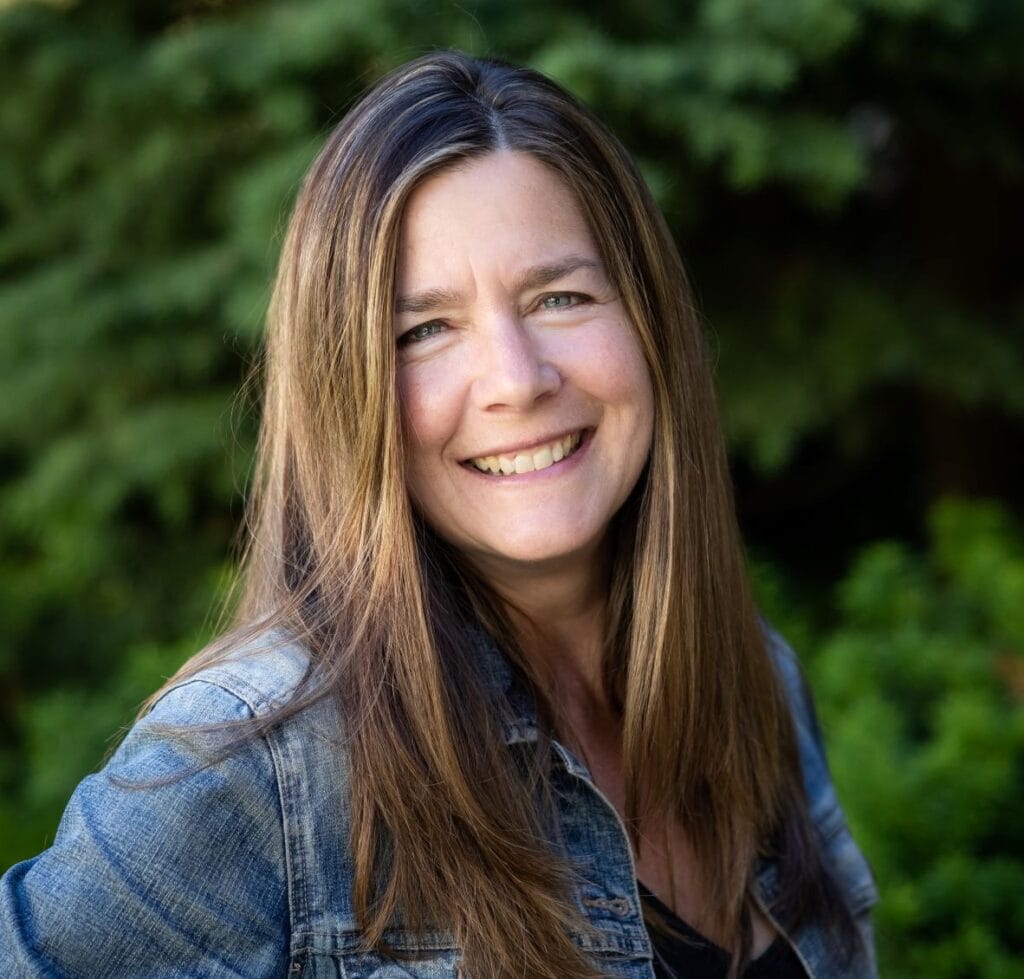
When Michele Comeau first started at the Resort Municipality of Whistler (RMOW) nearly two decades ago, it’s safe to say the organization’s communications and engagement with the community looked far different than it does today.
First joining the municipality in 2007, Comeau was tasked with heading Whistler’s communications efforts for the 2010 Winter Olympic and Paralympic Games, when the resort welcomed the world as official mountain host.
“When I first came on, even though there was some communications activity in the organization and with local governments generally at that time, it wasn’t even common to have a communications department,” she said. “There was a person who did a little bit of communications, but a lot of other things as well. So, when the organization decided that we needed to step up the communication and engagement associated with the Games, that was kind of the genesis of the department that lives on today.”
Comeau has been integral to the evolution of the department over a RMOW career spanning more than 18 years, a time that also saw her serve as the municipality’s Manager of Communications, Manager of Corporate Projects, and, for the past five months, Interim GM of the Community Engagement and Cultural Services Department.
As she readies for retirement on Denman Island, we caught up with Comeau to reflect on her time at municipal hall and how the RMOW’s approach to communications and engagement has shifted over the years.
The following interview has been edited for length and clarity.

The 2010 Winter Games were such a transformational time for Whistler and the RMOW. What was it like leading communications for the Games here?
Leading up to the Games, and during the Games, I was charged with two areas. One was the communications and engagement program, and so that entailed a whole lot of planning and engagement leading up to the Games. And a lot of things got launched during the Games which are kind of interesting from the communications perspective. We launched Whistler Today. It was a daily e-newsletter, and it was super successful at that time and today’s e-newsletter looks fairly similar.
The other thing that’s kind of neat is we actually started our first social media accounts, which, at the time, was quite a big deal. It was kind of revolutionary. It was very early days, but with a global event, it was an opportunity that we had to pull across.
There was a very early whistler.ca website before the Olympics, but we actually developed, for the times, quite a state-of-the-art website for the Games. And that was really the foundation for how whistler.ca grew over the years.
During that time, I was responsible for the Whistler Canada Olympic House. We converted the library into Whistler Canada Olympic House for the Olympics and Paralympics, and it was basically the place where we hosted Olympic athletes, their families and delegates. And there were always the Games playing. It was really an amazing experience.
One of the interesting things about that, and about the whole Games, period, actually, was there were so many things that we had to deliver that were so different than our usual day-to-day. People got redeployed across the whole organization. People were hosts, people were bartenders, writers, photographers, people were doing all these wild jobs that were completely out of their normal day-to-day. And it just demonstrated this really interesting teamwork mentality that people could actually just break out of their normal day-to-day, do something different and deliver this incredible experience.
You mentioned starting the RMOW’s first social media accounts. How did you view social media back then?
Well, at the time, it was new to me, and it was emerging. There were a lot more unknowns than knowns, but we had a great team of people that we’d pulled together to lead up to the Games and execute communications and muni relationships. And some of the team members really pushed for it, and they said, ‘You know what? We need to do this,’ and I listened, and we did it, and the rest is history.
Fast-forward to today, what opportunities do you think social media presents from a communications and engagement perspective?
I think, more than anything, it’s a tool to share information and to engage with communities, different types of communities. Certainly, the challenges are that, sometimes topics go on tangents, because everyone has opinions and is entitled to their opinions. So sometimes that can be challenging to manage. But all in all, I think it’s better to have those conversations and have those avenues for people to have important conversations.
I think many channels are required, in most cases, to have great conversations. So that’s one place that conversations are taking place. I think for a larger topic of discussion that’s important to the community, something like social media would be one aspect, and perhaps we would also have an open house, survey or other ways to ensure that people who use different ways to communicate and engage are able to be part of the conversation.
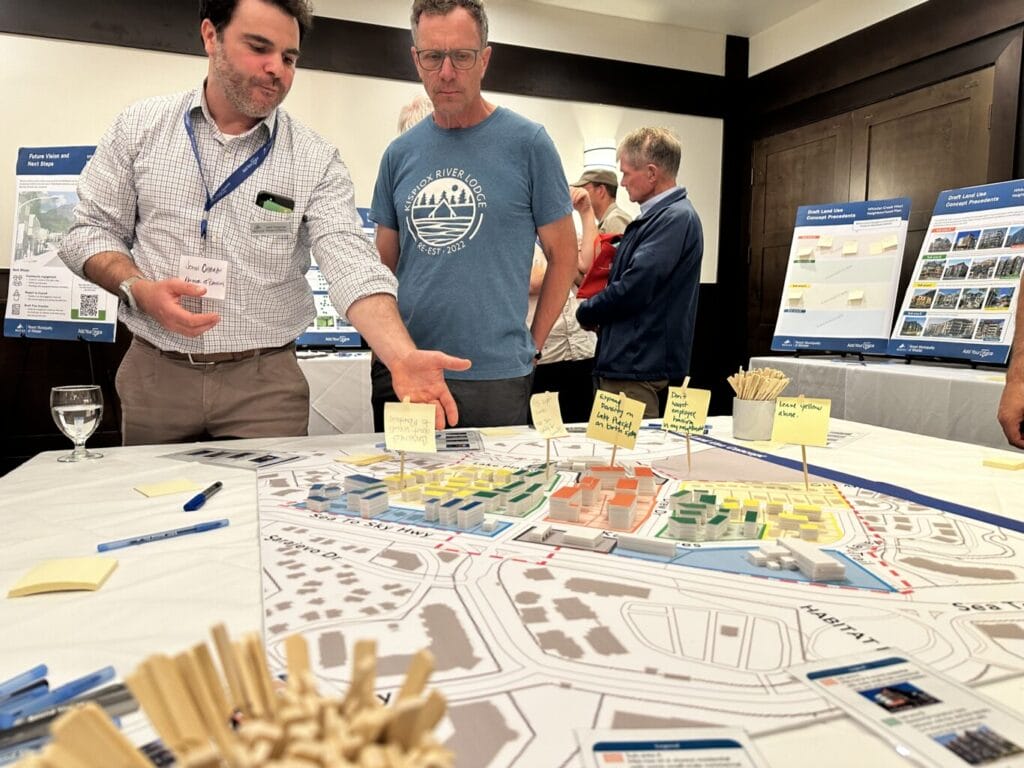
Beyond social media, how valuable is that face-to-face interaction when you’re engaging with the community?
I don’t have as much experience in other communities, but in Whistler, I strongly believe people like to get together and have conversations. And sometimes that’s a conversation about a very specific project. Sometimes it’s the ability to connect with likeminded community members or just other community members. I’ve seen it every single year that I’ve worked here, even during the COVID years, when it had to be an online community meeting, people here show up, and it’s important.
Speaking of COVID, how did the pandemic impact communications at the RMOW?
It was a very difficult time for our community and for our organization. It was an unprecedented experience, so everything was new. Certainly, when we had the opportunity to reach out and ask the community to come together and do something like a community meeting online, people absolutely responded and were really craving that opportunity to be together to talk about healing, response and recovery.
And out of that, there were various groups formed that took forward different ideas and took on almost a rebuilding mentality of: what do we need to do? So, it was really interesting to see how creative and innovative people could be in those times of just saying, ‘OK, we have to figure this out, and let’s get together.’
I think through that response and recovery period, we grew more resilient, but we also grew more understanding and accepting of each other.
That’s interesting. There’s been lots of studies indicating the pandemic increased division and distrust in society. Do you think Whistler resisted that trend?
I think so. It wasn’t something that I saw, certainly not locally. Perhaps because Whistler had the foundation of being a fairly close-knit community with a lot of common goals, values and mountain culture, and I think that continued to ring true for everybody, even in a difficult time.
What do you think is the most effective way to earn public trust and how can we build upon that?
I think that focus on engagement is critical in the realm of trust and that relationship that we have with the community: providing opportunities for in-person discussions, having open public council meetings, having our council be very accessible, which they very much are, sharing information and being transparent.
How would you say our approach to communications and engagement has shifted as an organization?
It’s interesting talking about the technology side of it, because that’s been maybe the biggest change. It’s really interesting to see the sophistication of systems for measuring what is working for audiences and using that to refine and improve service delivery through technology. The Communications Department is very tapped in in a way we could only dream of years ago.
And then, things like committee structures, which is an important part of engagement. For a period of time, there were the Whistler 2020 Task Force groups, which some people will remember. And once we went into the Games, and then after the Games, those kind of dissolved, and we reinstated a different committee structure.
I think it is important to point out that there are aspects of local government that inherently build in communications and engagement to the work such as committees, public hearings and public council meetings. So a lot of this work is to expand upon those baselines.
The amount of engagement and the topics we’ve engaged on have evolved over time, and I think we’ve got a fresher perspective. The definition of engagement that we’re working with today is strengthened by the Council prioritization of community engagement and the creation of this division about three years ago.
And I love the definition that we placed around engagement, because it’s a very broad definition, everything from formalized engagement, like a survey or an open house, to how we deliver customer service, interact with the community, and those types of things. So, we have a great definition, purpose statement and framework for how we grow our engagement program. I look forward to seeing what happens next.
What do you see as the biggest opportunities and challenges facing the RMOW in the future it terms of communications and engagement?
With engagement, looking at how we can continue to find new ways of engaging with the community. Also, looking at our day-to-day interactions and how we can use every one of those as an engagement opportunity, and asking the question: are there other ways that we can bring people together to connect? Not everything has to have a specific agenda.
I remember many years ago, there was a point in time where we were fortunate enough to hold some community events where we brought in guest speakers, and I remember David Suzuki coming to speak, which was incredible. We hosted and he came in and spoke. It was very inspiring, and there were questions and discussions afterward. That’s community building. I don’t think we’re the only ones that play that role, but I look forward to seeing more of that general community connection.
There are a couple things coming up in our relatively near future: The Official Community Plan, which is our foundational guiding document, we’ll be looking at updating that, I believe next year. Talk about an amazing way to engage the community. The last time we did an update, it was an amazing example of community coming together to share their vision. We tried to engage everyone who had anything from a few minutes to five hours or more, and the result was an incredible amount of community input.
The Smart Tourism work is another important opportunity and discussion across our community. Looking at how we continue to deliver an amazing tourism offering and still be able to have a community that is healthy, has housing and all the amenities that we enjoy.
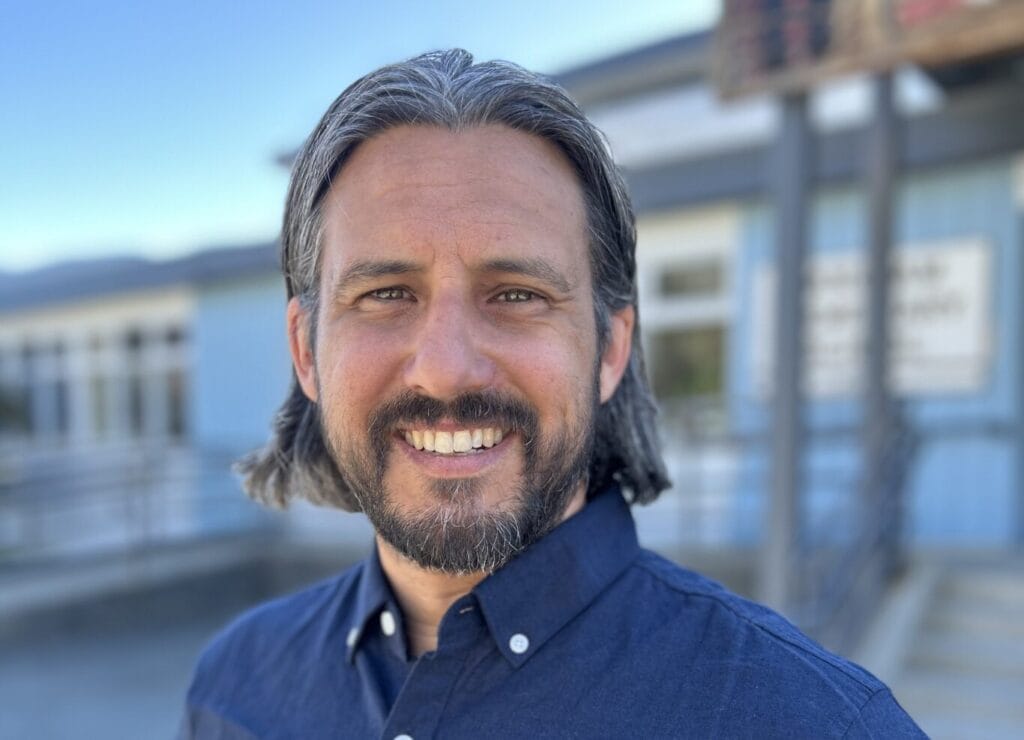
Then, looking forward with the team, we’ve got an amazing new leader in Jeff Maynard who is coming to the division and brings a lot of experience in the community. He brings different experience and perspectives and is a great fit for the organization. I look forward to seeing what he and the other very strong mentors and teams in the organization come up with.