
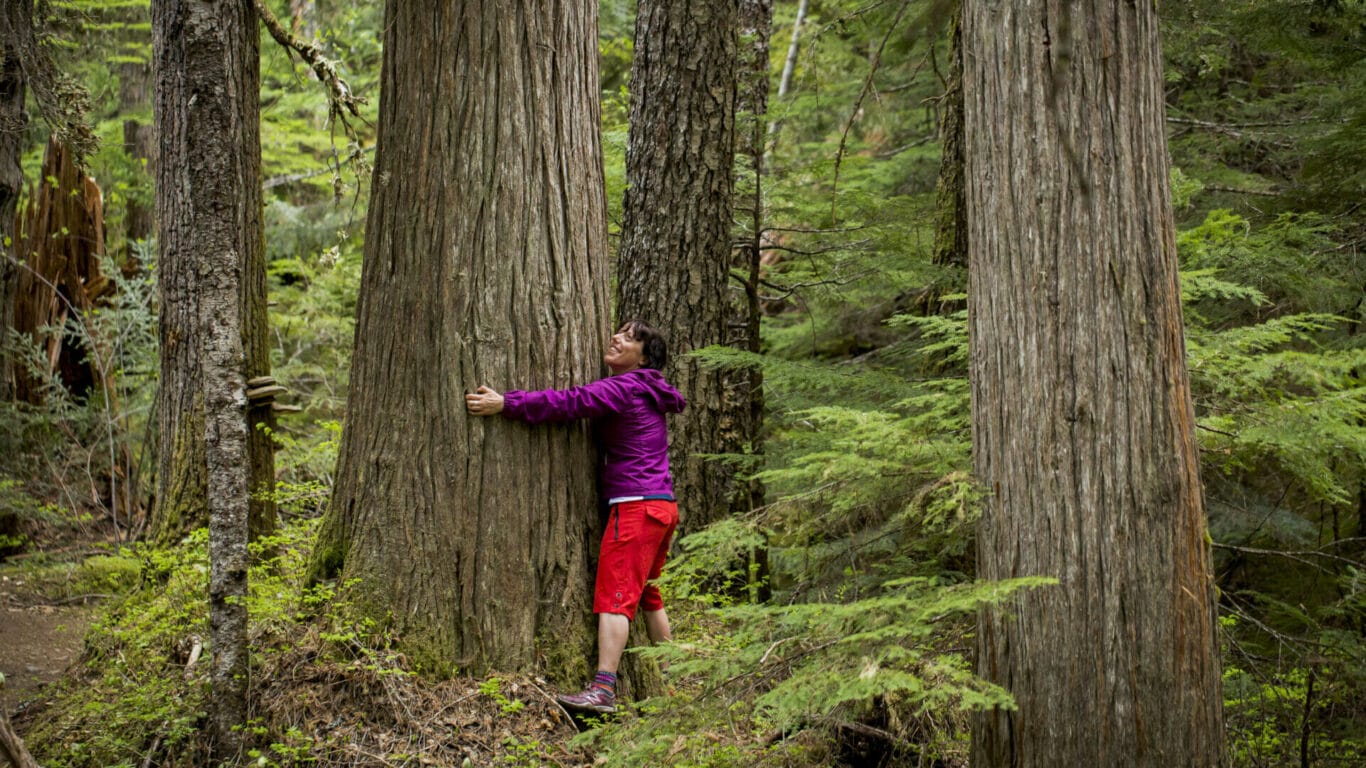
Our policies balance protecting trees with tree management. Thousands of trees make up Whistler’s forests and provide environmental, recreational, aesthetic, economic and health benefits.
To cut a tree on your property
You might need a permit to cut a tree:
- First, confirm if you need a development permit to cut or alter a tree on your property. You can review the relevant Development Permit Area guidelines and exemptions. Contact the Planning Department by email planning@whistler.ca or by phone 604-935-8170 for their guidance.
- If you don’t need a development permit, confirm if you need a tree cutting permit to cut or alter a tree on your property. Contact the Environmental Coordinator at treecuttingpermits@whistler.ca or by phone at 604-935-8198. You can read more detail below, on the tree cutting permit application (PDF) and full details in the Tree Protection Bylaw.
- Check if the tree is protected by provincial or federal laws. A summary of this protection is included below.
Tree cutting or pruning activities should occur outside of Whistler’s bird nesting period from March 15 to August 15.
Understanding the new protection for trees in Whistler
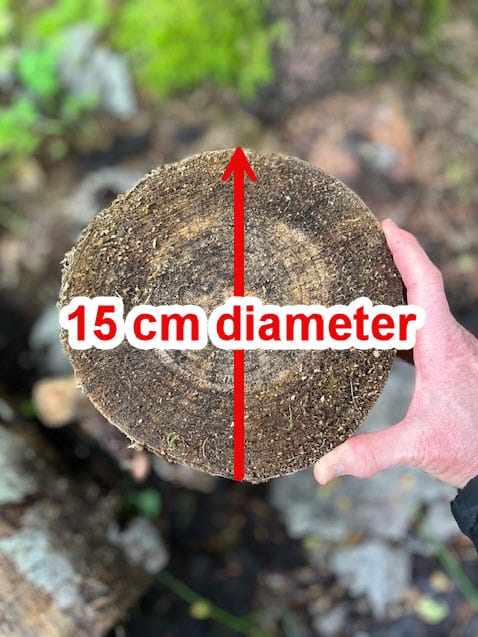
We brought in our Tree Protection Bylaw in June 2025 to increase protection for Whistler’s trees and regulate tree cutting. This bylaw applies to all trees in Whistler with a diameter of 15 cm or more, measured 140 cm from the ground. The bylaw specifies how many trees are required on land, based on the size and zoning of the property. And it also covers trees in riparian areas, which means trees near water, such as lakes, wetlands or streams.
View the council presentation and report.
When you need a tree cutting permit
You usually need a tree cutting permit:
- to cut any tree defined as a Significant Tree.
- to cut a tree in a riparian area. This means within 30 metres of a stream, lake, wetland or other watercourse.
- if cutting the tree would mean you won’t have enough trees to meet your lot’s Tree Density Minimum.
To obtain a tree cutting permit, please submit an application (PDF) and required documentation to treecuttingpermits@whistler.ca.
Tree cutting permit fees
The fees for tree cutting permits are as follows:
- $250 to cut up to 10 trees
- $400 to cut more than 10 trees
Is my tree protected as a Significant Tree?
Significant Trees are protected and require a tree cutting permit to alter. They include:
- Covenanted trees: trees over 15 cm diameter protected by a covenant on the property title.
- Trees over 15 cm diameter within 20 metres of the Highway 99 right-of-way. View the highway right-of-way in our GIS map layers.
- Large trees over 60 cm diameter.
- Old trees that are over 250 years old and over 15 cm diameter. Contact a qualified arborist or certified tree assessor to confirm tree age.
- Wildlife habitat trees over 15 cm diameter hosting a raptor, heron or pileated woodpecker nest, or a bear or cougar den. The tree is still protected if the animal or bird has left.
During construction, Significant Trees must have an area protected around them in a radius eight times their diameter. Details can be found in the bylaw. Of note: Diameter measurements are all made 140 cm from the ground.
Calculating the minimum number of trees required on a lot
Whistler limits the number of trees that can be removed from land by setting a required tree density. This is called the Tree Density Minimum (TDM) and it is based on the lot’s zoning and size.
A typical single-family lot measuring approximately 18 by 30 metres, or 60 by 100 feet, needs a minimum of four trees.
You can find your lot’s zoning and size on our GIS map.
Tree Density Minimum ratios are set at:
- 60 trees per hectare for Leisure Zones, Residential Zones, Rural Resource Zones, and Tourist Pension Zones;
- 40 trees per hectare for Multiple Residential Zones and Tourist Accommodation Zones;
- 20 trees per hectare for Mountain Commercial Zones, Commercial Zones, Industrial Zones, Lands North Zones, Institutional Zones and Parking Zones.
Calculating your lot’s Tree Density Minimum
Here’s an example calculation for a single-family residential lot measuring approximately 18.3 metres by 30.5 metres (or 60 feet by 100 feet).
- This zoning requires 60 trees per hectare as its Tree Density Minimum ratio.
- The lot is 558 metres square, approximately 0.06 hectares.
- Multiply 60 by the lot size 0.06 to find the lot requires at least 3.64 trees. Round this up to a total of 4 trees.
- This lot requires a minimum of 4 trees.
Replacing trees when there aren’t enough on a lot
You will need to plant trees if you want to cut a tree down and it would leave your lot without enough trees to meet its Tree Density Minimum. You may also be required to replace trees if you cut certain Significant Trees. Replacement trees may be met through keeping existing smaller trees or by planting new trees which meet specific criteria such as species, size and location.
Exemptions where you don’t need a tree cutting permit
Some tree work doesn’t need a tree cutting permit.
You may not need a tree cutting permit for the following — see the bylaw for details or contact the Environmental Coordinator:
- When you have a valid permit from us allowing you to cut trees, such as a development or building permit.
- Where the tree prevents reasonable construction clearance or driveway access for your authorized development.
- To cut high-risk trees.
- To prune and limb trees for tree health, safety and wildfire mitigation.
- To remove invasive tree species.
- If you wish to cut trees up to 30 cm diameter that are within 20 metres of the Highway 99 right-of-way — if this is recommended in a FireSmart Assessment. This cutting can’t go below the lot’s minimum tree density and you can’t cut covenanted trees more than 250 years old, large trees, wildlife habitat trees or trees in riparian areas.
- To cut trees when you’re staying above the minimum tree density required on the lot and you’re not cutting Significant Trees.
How to measure a tree’s diameter
A tree’s diameter at breast height (DBH) is the diameter of a tree’s trunk or main stem 140 cm from the ground. Measure this from the side of a tree if the tree is on a slope.
- To estimate, hold a ruler against the tree to estimate the diameter.
- To more accurately measure, measure the circumference by wrapping a tape measure around the tree 140 cm from the ground.
- A circumference of over 47 cm means the tree’s diameter is more than 15 cm. The Tree Protection Bylaw applies to all trees over 15 cm diameter.
- A circumference of over 188 cm means the tree’s diameter is more than 60 cm. This means the tree has additional protection in the Tree Protection Bylaw.

Penalties for tree cutting without a permit
If you cut or damage a tree without the required permit, you and/or the property owners may be fined up to $1,000 per day per tree until the situation is resolved. Our bylaw allows up to a $50,000 penalty through a court conviction.
Provincial and federal regulations
Provincial or federal laws may require an assessment, approval or permit process to cut or alter certain trees. For example, the Heritage Conservation Act requires a permit for the alteration or removal of a culturally modified tree.
Trees in riparian areas within 30 metres of a waterway are also protected by the BC Riparian Areas Protection Regulation, even in cases where RMOW permission is not required.
Birds and bird nests
Plan tree cutting or pruning for outside Whistler’s bird nesting period from March 15 to August 15. Within these dates, you’ll need a bird nesting survey a Qualified Professional beforehand.
If you wish to remove or modify a tree with an active bird nest or the nest of a species whose nest is protected year-round (including Bald Eagles, Peregrine Falcons, Osprey, Heron and Pileated Woodpeckers), then you must obtain a permit under the BC Wildlife Act – and also check with Environment Canada to see if a federal permit is required under the Migratory Birds Convention Act.
Christmas tree permits
Heading into the woods to cut your own Christmas tree? Remember to get your free permit. Christmas tree permits are available online through the Province of BC. You must have a valid permit to cut a Christmas tree on unceded territories (currently managed by the Province).