
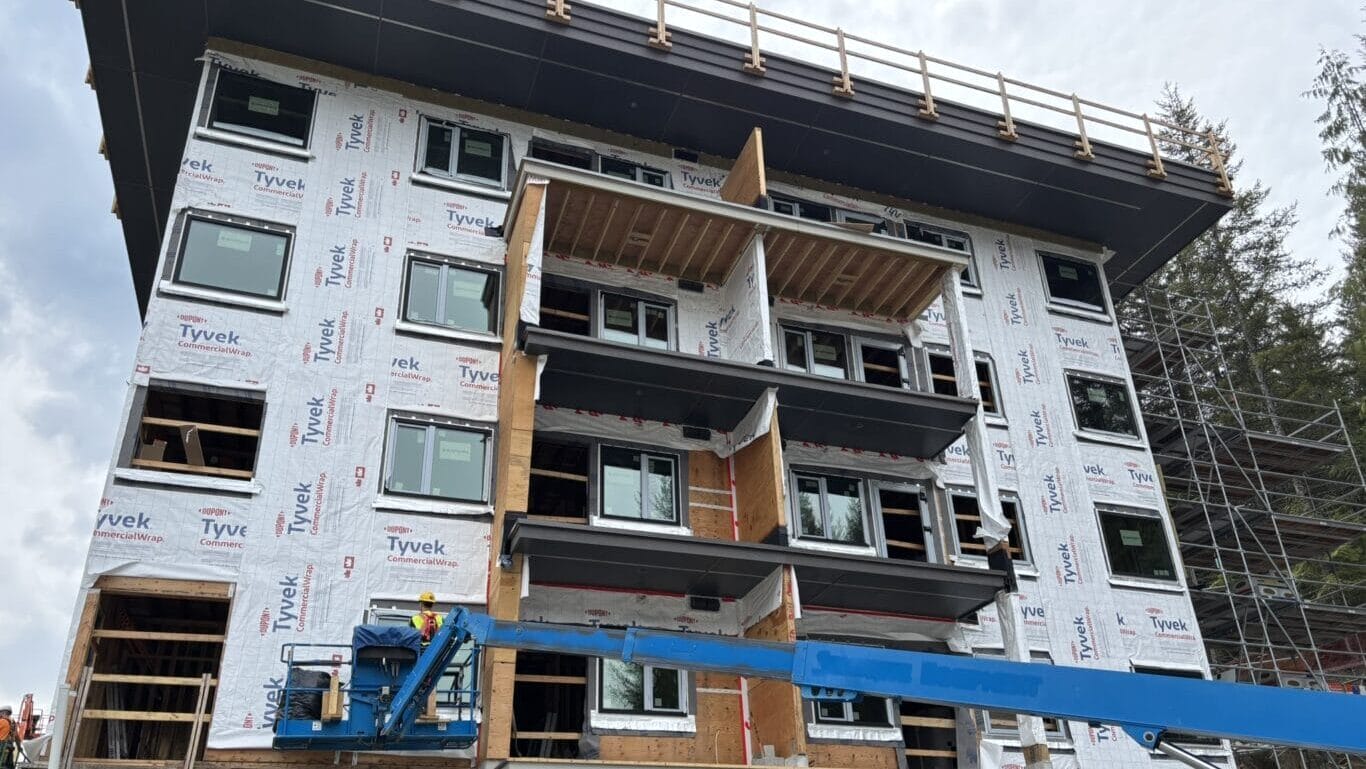
Goal: By 2030, all new buildings achieve the top step in B.C.’s Energy Step Code, use only low-carbon heating systems, and embodied carbon emissions drop 40 per cent.
Efficient and sustainable buildings lower energy costs and encourage healthier, more comfortable living. Buildings currently account for the second-highest community emissions in Whistler. Big Move 4 influences how new homes and buildings are constructed, reducing emissions that come from our buildings. In 2019, Whistler adopted the BC Energy Step Code. In 2024, we increased the requirements of the BC Energy Step Code and introduced the Zero Carbon Step Code. This standard in the British Columbia (BC) Building Code provides a pathway for new buildings to reduce operational carbon emissions. Regulation and incentives can prioritize low-carbon cooking, space heating, and water heating.
What we’re doing
- Adopt stronger building energy and carbon rules over time by following stricter steps of the BC Energy Step Code and Zero Carbon Step Code.
- Partner with the provincial government to improve standards for energy use and greenhouse gas (GHG) emissions in new buildings.
- Encourage low-carbon energy systems in new buildings, allowing higher density or lower step code.
- Provide rebates for testing air tightness during and after construction.
- Promote campaigns for Step Code and low-carbon energy systems for the building industry, home buyers and realtors.
- Discourage carbon-based outdoor heating such as patio heaters, gas-powered fire pits, heated driveways, hot tubs and saunas, through policy and/or permit changes.
- Champion low-carbon design, material use, and construction practices for new buildings.
- Develop a plan to require calculated emissions from building materials and construction for Part 3 buildings as part of permit submissions.
- Build RMOW staff capacity around emissions from building materials and construction.
- Demonstrate RMOW leadership with new municipal building construction.
- Streamline the process for property owners, developers and RMOW staff to meet higher green building standards.
Small actions you can take
- Consider size and efficiency, and build smaller, smarter spaces that use less energy.
- Ask about the Step Code rating when buying or renting a home.
- Opt out of unnecessary parking spaces to cut down on construction emissions.
- Build resilience in your home by choosing renewable energy technologies like solar panels and battery storage.
Did you know?
- Different materials used in construction, such as mass timber and low-carbon cement, have a lower development carbon footprint.
- Different building processes and practices can also have a lower development carbon footprint, such as eliminating spray foam.
- Changes to the building code make it possible to build fewer parking stalls, reducing development’s carbon footprint.
RMOW divisions and key partners
Lead: Building Department
Support: Climate and Environment
Partnerships: BC Energy Step Code, Canadian Homebuilders Association, Whistler Housing Authority