
Goal: Protect, support and increase the resilience of local ecosystems, natural assets and biodiversity.
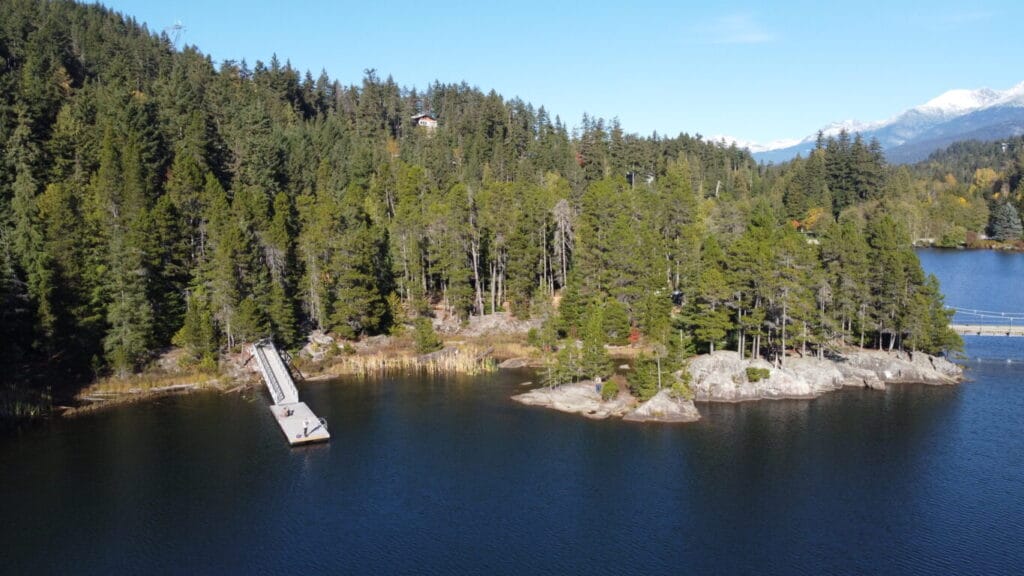
From alpine meadows to wetlands and old growth forests, nature is at the heart of the Whistler community. Healthy environments store carbon, cool the air and water, and help prevent flooding and erosion. They also create habitat for wildlife. When we protect and restore nature, we also protect our community from climate risks. These special places give us outdoor adventures and support many unique plants and animals but they are also at risk from climate change. As temperatures rise and weather becomes more extreme, habitats are lost and some species are at risk of decline. Wildfires and invasive species only add to the problem.
Nature is also part of the solution. By protecting Whistler’s ecosystems and biodiversity, we can make our community stronger against climate change. When nature is healthy, it can better support us.
What we’re doing
- Develop policy, plans and legislation to protect and restore local ecosystems. For example: implementing the Priority Habitat Framework.
- Continue to monitor the health of important local species and ecosystems.
- Prevent and minimize the spread of invasive species.
- Foster a healthy, biodiverse and climate resilient Cheakamus Community Forest in partnership with Sḵwx̱wú7mesh Úxwumixw (Squamish Nation) and Líl̓wat Nation.
- Support environmental integration and education opportunities.
Small actions you can take
- Stay on trails to protect sensitive vegetation and habitat areas.
- Plant native species in your yard to encourage pollinators and biodiversity.
- Respect wildlife by keeping your distance and not feeding wild animals.
- Clean your gear (boots, bikes, boats) to prevent spreading invasive species.
- Follow environmental regulations (for example, the Environmental Protection Bylaw and the Tree Protection Bylaw).
- Use water wisely; it’s a limited natural resource.
- Get curious. Learn about local ecosystems and the species they support.
- Volunteer with a local stewardship organization.