
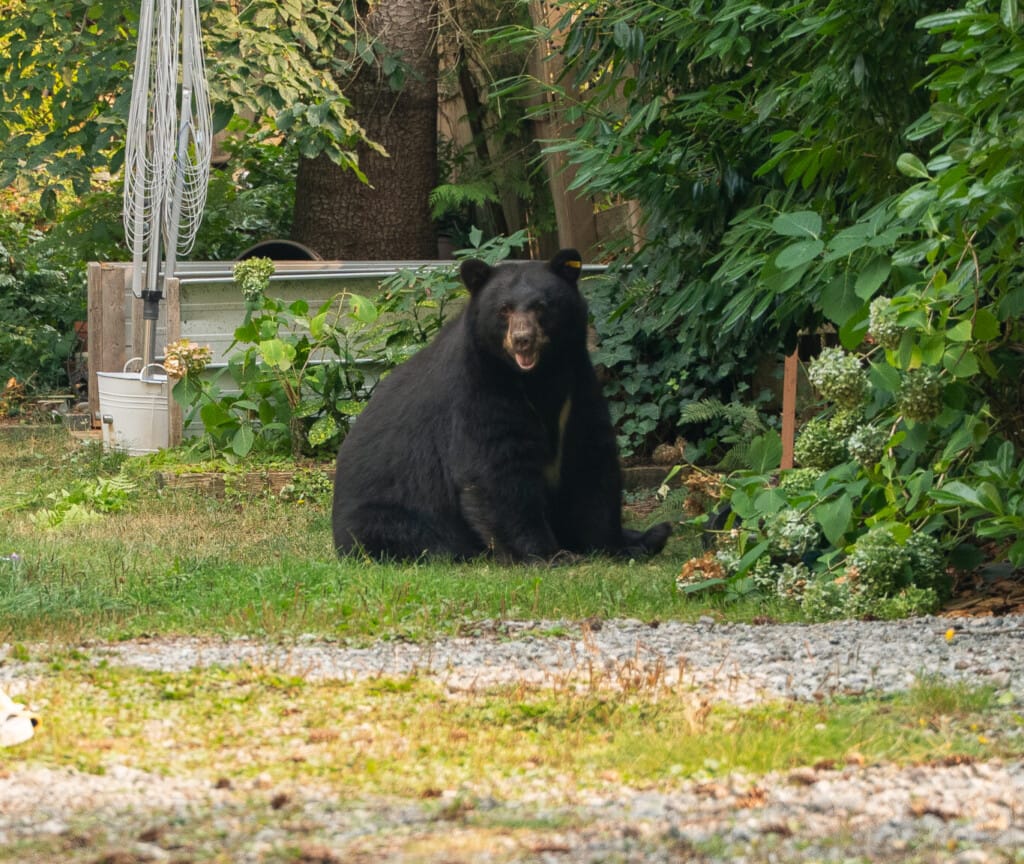
As summer transitions into fall, Whistler’s bears enter one of the most important periods of their year: hyperphagia.
Hyperphagia is the intense feeding period that occurs before winter denning. During this time, bears dramatically increase their food intake and can spend up to 20 hours a day searching for food, consuming as many as 20,000 calories daily to build the fat reserves needed to survive the winter.
With bears focused almost entirely on finding food, they are more likely to travel through neighbourhoods, parks, trails and other developed areas in search of easy calories. This is when the actions of residents and visitors matter most.
The good news? A few simple choices can help keep bears wild and reduce the risk of human-bear conflict.
Why Hyperphagia Matters
Bears naturally feed on berries, vegetation, insects and other seasonal food sources. During hyperphagia, however, their drive to find food becomes extremely intense. A garbage bin, cooler, bird feeder, pet food bowl or unattended picnic can provide far more calories than a bear would find through natural foraging.
If a bear successfully accesses human food or other attractants, it quickly learns to associate people and developed areas with easy meals. Bears have exceptional memories and often return to places where they have found food before. In some cases, mother bears even pass these learned behaviours on to their cubs.
A food-conditioned bear is more likely to repeatedly visit developed areas, increasing the potential for conflict. Unfortunately, bears that become significant public safety concerns may ultimately have to be dispatched.
Secure All Attractants
Managing attractants is the most effective way to prevent human-bear conflicts.
Remember that bears are attracted to scents, and their sense of smell is far stronger than ours. Even items that don’t seem like food can attract a curious bear.
Help keep bears safe by:
- storing garbage inside a secure building or bear-resistant enclosure;
- keeping food, coolers and backpacks attended at all times;
- cleaning barbecues regularly and removing grease residue;
- bringing food delivery packages inside immediately;
- storing pet food indoors and feeding pets inside;
- keeping vehicles free of food, coolers, garbage and scented items;
- picking ripe fruit promptly and collecting fallen fruit daily; and
- securing toiletries and cosmetics while camping.
Remember: one food reward can change a bear’s behaviour for years.
Bird Feeders and Hummingbird Feeders
Did you know that bird feeders and hummingbird feeders are among the strongest residential bear attractants?
Bird seed and hummingbird nectar are extremely high in calories and are easy for bears to access. Even feeders mounted on upper-level decks or balconies are not out of reach; bears are excellent climbers and will often climb trees, posts, or railings to reach them.
Because they can attract bears into neighbourhoods, bird feeders are classified as unsecured wildlife attractants under our Solid Waste Bylaw.
If you enjoy bird watching, consider joining one of the Whistler Naturalists’ free bird viewing tours. These outings provide an excellent opportunity to observe local bird species in their natural habitat without attracting wildlife into residential areas.
In Parks, Lakes and Recreation Areas
As Whistler residents and visitors continue enjoying the outdoors this fall, it is important to remain vigilant wherever food is present.
Whether you’re spending the day at a park, having a picnic, hiking or relaxing by one of Whistler’s lakes:
- Keep food and coolers within arm’s reach.
- Never leave backpacks or grocery bags unattended.
- Pack out all garbage and food scraps.
- Use bear-resistant waste bins whenever available.
- Clean up crumbs and spills before leaving.
Even a brief moment of inattention can provide a bear with a food reward.
Keep Dogs on Leash
One of the simplest ways to protect both people and bears is to keep dogs on leash.
Research has shown that many bear attacks involve off-leash dogs. Dogs may chase, harass or surprise a bear, then return to their owner with the bear following behind. Even normally calm bears may react defensively when approached by an uncontrolled dog.
When walking your dog:
- Keep dogs on leash unless you are in a designated off-leash area.
- Stay alert, especially during dawn, dusk and at night.
- Check your surroundings before leaving home or entering trails.
- If you encounter a bear, keep your dog close and avoid allowing it to lunge or bark at the animal.
Responsible pet ownership is an important part of living in bear country.
Help Keep Bears Wild
As bears enter hyperphagia, they are doing exactly what nature has programmed them to do: eat as much as possible before winter. Our responsibility is to ensure they continue relying on natural food sources rather than human ones.
By keeping dogs on leash, securing attractants and staying Bear Smart, we can help reduce conflicts, protect wildlife and keep Whistler safe for both people and bears.
Together, we can help keep Whistler’s bears wild.