
Looking to get caught up on the latest from Council? We’ve pulled together some key stories from the July 14 Committee of the Whole and Regular Council meetings, including:
- Council directs staff to go back to the negotiating table over Northlands development
- Security cameras considered for Village taxi loop
- MLA Jeremy Valeriote updates Council on his work in the legislature
- Council gives first readings to new Building Bylaw and permit fees
- Local non-profits tell Council how they’ve used municipal funds
For all the details, find council reports and video recordings of the full meetings at whistler.ca.
Northlands rezoning requires further agreement before moving ahead

At the July 14 Council meeting, Council directed staff to continue processing the rezoning application for 4500 Northlands Boulevard, one of the last remaining largely undeveloped land parcels in Whistler Village.
In 2021, developer Beedie Living initiated a rezoning for the 5.3-hectare site and agreed to undertake a three-phase enhanced rezoning process. In 2026, the developer submitted a proposal to replace the site’s current hotel zoning with a mixed-use residential and commercial development featuring 107 townhouses, 110 condo units in a 10- and 12-storey building, a three-storey building with up to 60 employee housing units, and commercial uses, including a health and wellness facility with an outdoor pool, restaurant, café, and retail/personal service space.
The main sticking point surrounds the timing and value of the project’s Community Amenity Contribution (CAC), in-kind or cash contributions provided by a developer to benefit the public and compensate for a project’s anticipated impact on local infrastructure and services. Staff’s estimated CAC value is $57.8 million, while the package submitted by Beedie Living is valued at $37 million.
Other issues include concerns with floodway restrictions and plans for a stream that runs through the site, the applicant’s proposal to build on the Northlands Boulevard road right-of-way, concerns about vehicle access and parking, and building designs that don’t currently conform to Whistler Village design guidelines. The revised proposal also has fewer employee housing units and less open space and gathering space than earlier design concepts.
“This is a much different proposal from what we saw before – a lot more townhomes, more commercial space; there was community space in the earlier concepts,” Councillor Cathy Jewett said. “I understand the feeling that we’ve waited long enough, but we’ve waited this long, so let’s do it right.”
Council also discussed the proposed height of the buildings relative to other taller hotels around the resort. Councillor Ralph Forsyth proposed an amendment that would cap all of the development’s buildings at no more than eight storeys. That amendment ultimately failed in a 3-4 vote, with Mayor Jack Crompton arguing it wouldn’t be appropriate to set a height limit before the public, staff and Council have a chance to review the full proposal.
One element of the Northlands proposal that has garnered significant attention surrounds the future of a community recreation facility, with the Whistler Racket Club located on the proposed development site. As part of the CAC package, $15 million has been proposed for offsite recreation. Councillor Jen Ford introduced a motion for staff to begin a community planning process around the form and location of a multi-purpose municipal recreation facility and the community’s recreation needs. Council passed the amendment after revising it to remove language promising “continuity of play,” with the RMOW unable to guarantee a facility would be open in time for the Whistler Racket Club’s closure. The proposed construction phasing plan leaves open the possibility the club could stay open during early parts of construction.
As Beedie and staff work together to resolve these issues, the project will go to various Council committees for review, to the public for consultation, then back to Council for consideration of the rezoning bylaw.
Read the full report here.
Council to consider security cameras at Village taxi loop
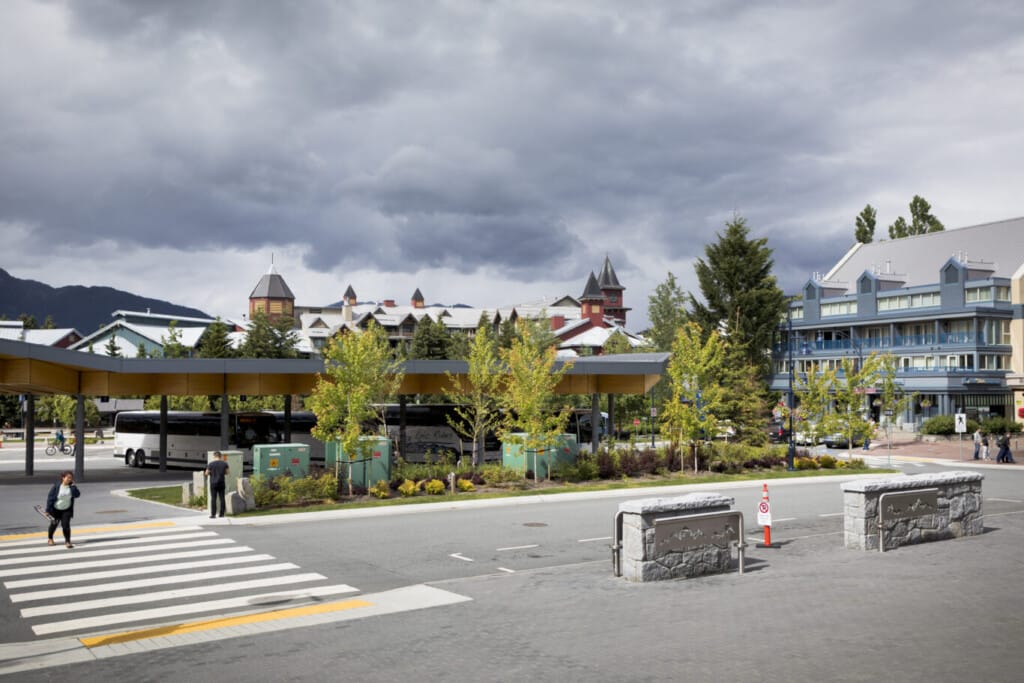
At the July 14 Regular Council meeting, Mayor Jack Crompton revealed that Council is considering adding public security cameras at the Village taxi loop to address recent safety concerns.
This year, Whistler RCMP has been investigating allegations of sexual harassment and misconduct by local taxi drivers.
“Earlier today, Council was having conversations about ongoing issues around the taxi industry in town and made a motion that staff assess the feasibility of installing public security cameras in the RMOW taxi loop,” Crompton explained.
If approved, the camera installation would be considered as part of the 2027 budget planning process.
MLA Jeremy Valeriote reports to Council on his progress in the legislature

West Vancouver-Sea to Sky MLA Jeremey Valeriote was at the Committee of the Whole meeting on July 14 updating Council on his work in the provincial legislature, as well as discussing Whistler’s top priorities and concerns.
One of the topics discussed surrounded the fact Valeriote and fellow MLA Rob Botterell, the only Green Party members in the legislature, would no longer work with B.C.’s ruling NDP Party. Valeriote said the accord between parties was ended after they failed to reach agreement on several key priorities. According to Valeriote, around a third of the commitments were completed, another third of commitments were progressing too slowly for the Greens, and the other third had not started.
One of the priorities that Valeriote said was moving too slowly was the commitment to deliver regional transit connecting Sea to Sky communities. Leaders across the corridor have lobbied the province for years to increase service between Whistler and Pemberton and restore service to Squamish but have yet to agree to a funding model. Valeriote noted that the Premier committed to implementing frequent, reliable and affordable regional transit in the corridor this year, but said the service is still being discussed with local governments, First Nations and the Squamish-Lillooet Regional District’s transit committee.
“There’s still a lot on the table to be negotiated, but I’m still very hopeful that will go ahead,” said Valeriote, noting that federal MP Patrick Weiler may also be able to assist.
Other issues addressed by Valeriote included the issue of illegal camping and abandoned vehicles on Crown land in Whistler, First Nations closures in Brandywine Meadows and at Joffre Lake, and safety and emergency response on Highway 99 after serious accidents that can lead to lengthy road closures.
“The overall reckless driving, the communication around delays is pretty severely lacking, and the speed of investigations and the closure times – those are the four pieces (we’re addressing),” Valeriote said.
Councillor Arthur De Jong posited public safety during highway closures in extreme weather might outweigh the need for police to investigate an accident. He asked Valeriote who would make the call in the event of a prolonged closure or when conditions create a safety risk for people stuck in traffic – such as the nearly eight-hour closure on Highway 99 following a fatal accident near Squamish earlier this month.
“I don’t think anyone is really in charge, which is why it turns into a mess,” Valeriote replied.
Councillor Cathy Jewett noted that information posted on DriveBC during the closure wasn’t updated frequently; as a result, many motorists were under the impression the issue would be resolved in two or three hours. She also noted that electronic notice boards on the highway weren’t updated.
“There were opportunities for people to turn before they even got in (the closure),” she said.
In the discussion about illegal camping, Valeriote said he understood the community’s concerns.
“I think we’ve reached the point where we can’t look the other way,” he said. “We all recognize that something needs to be done, so there’s some cooperation that needs to happen between (Whistler) and the province.”
Watch the full presentation here.
Council approves changes to building permit fees
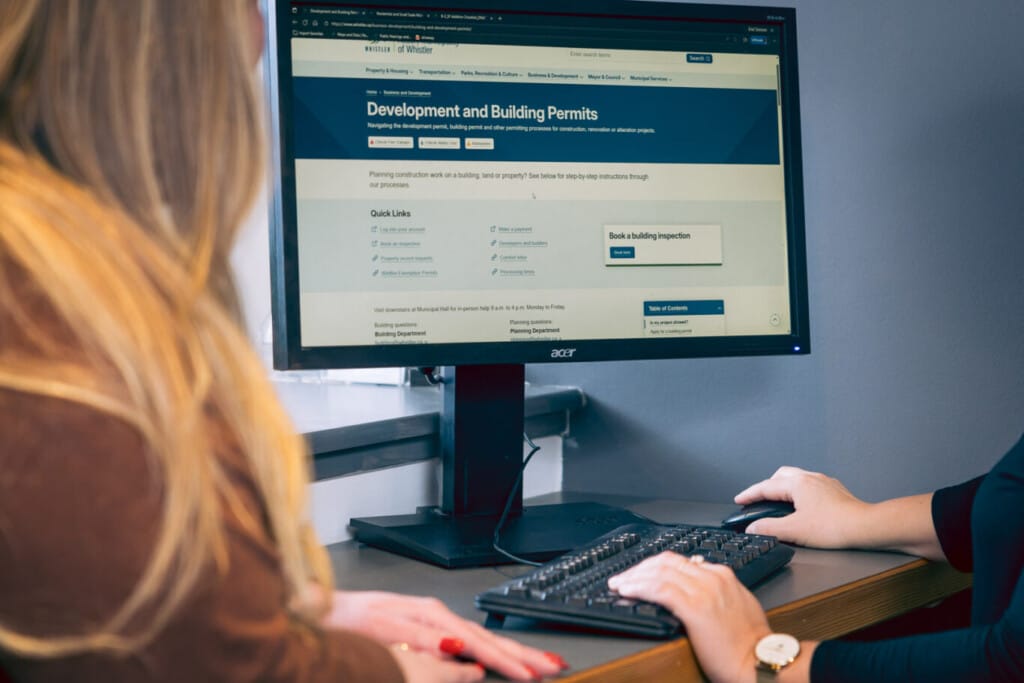
Whistler Council gave first three readings to an amended Building Regulation Bylaw and building fee structure at the July 14 Council meeting.
Council first adopted an overhauled building bylaw and permit fee structure in July 2025. Staff requested additional time to incorporate public feedback, test implementation of the new fee structure and overhauled bylaw and bring back for consideration any minor amendments to address housekeeping issues and resolve unintended interpretations on the bylaw.
Updating the Building Regulation Bylaw and Building Fees and Charges Bylaw is intended to improve clarity, transparency, consistency and efficiency in the building permit process.
The new fee structure is based on floor area with a rate per square metre applied to different residential and commercial permit types.
If approved, the new bylaws will go into effect September 1.
Read the full report here.
Non-profits report on Fee-for-Service activities
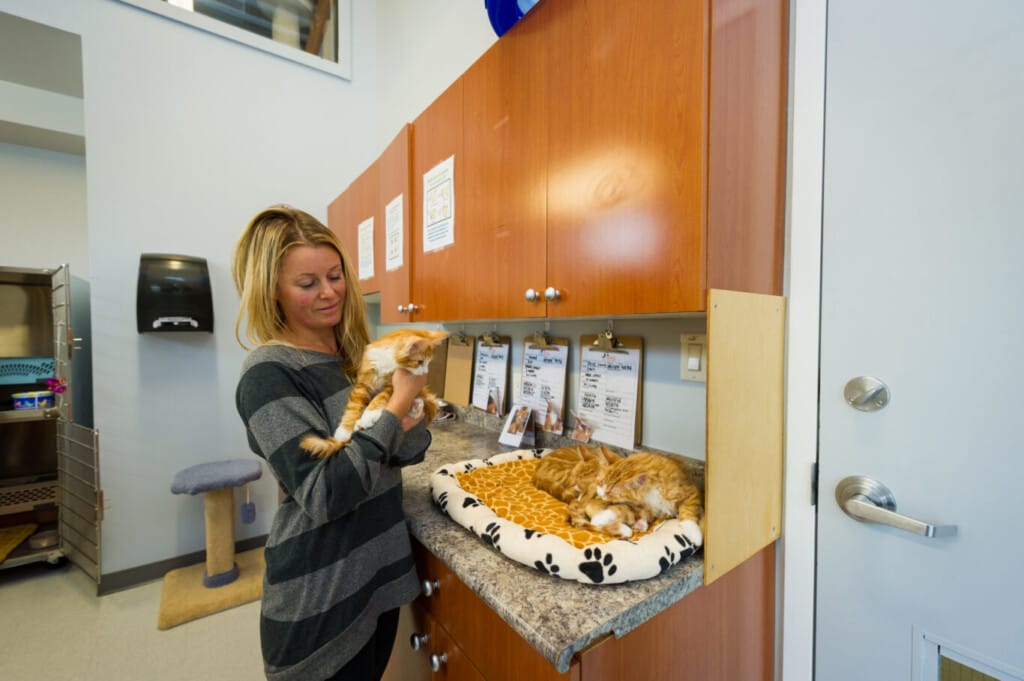
Five local non-profits presented to Whistler Council at the July 14 Committee of the Whole meeting, reporting back on how they’ve spent municipal funds given to the organizations through fee-for-service agreements.
Every year, Council hands out funding to local non-profits providing services that support the community and align with Whistler’s Official Community Plan. Last Tuesday’s Committee of the Whole meeting featured reports from five organizations that received municipal funds in 2025: Arts Whistler, the Sea to Sky Invasive Species Council, the Whistler Museum, the Whistler Off-Road Cycling Association (WORCA) and Whistler Animals Galore (WAG).
Arts Whistler kicked off the presentations, listing 11 community programs delivered in the past year, including live musical performances, the Anonymous Art Show, Art on the Lake and the Whistler Children’s Festival. The municipality provided $594,825 to the organization in 2025.
The Sea to Sky Invasive Species Council spent municipal funds on staff training, programs targeting specific invasive species, monitoring of zebra and quagga mussels, and treating 640 square metres of public land. The organization received $75,705 in 2025.
The Whistler Museum maintains a collection of artifacts, photos and other exhibits related to Whistler’s history, hosting almost 30,000 people in the museum and at museum events. In 2025, the municipality provided the museum with just over $224,000, representing roughly 48 per cent of its operating budget.
WORCA received $290,925 from the municipality in 2025, which was used to maintain a network of over 225 kilometres of trails. In addition, WORCA volunteer trail nights contributed another 1,369 volunteer hours towards trail projects.
Last year, WAG, Whistler’s local animal shelter, cared for 25 stray animals and facilitated 73 adoptions – including 40 animals in need of critical care. The shelter also boarded nine animals for individuals in crisis. WAG received $124,373 in municipal funds last year.
Watch the full presentation here.
To attend an upcoming meeting, check out the Council meeting Schedule. Agendas and Minutes are available online. To connect with Council, consider Borrowing a Councillor from the Library’s Unusual Items Collection, or get in touch with them individually by phone or email.