
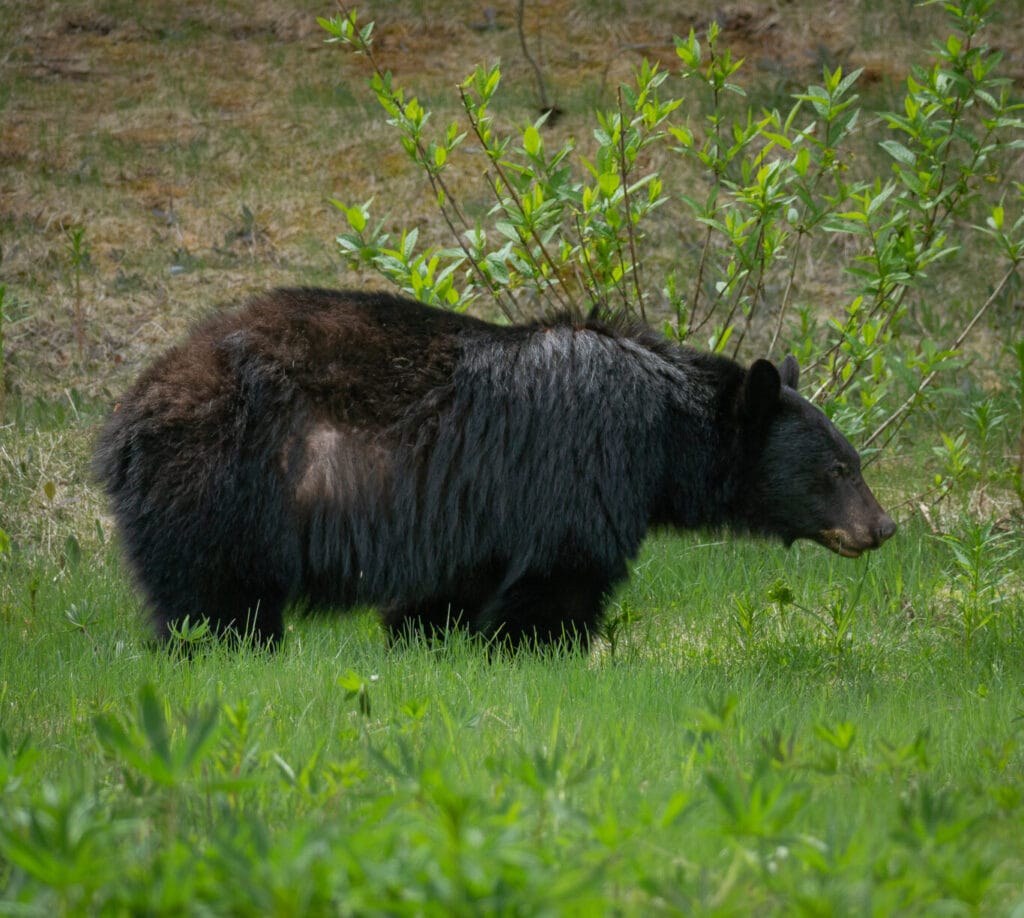
It’s springtime in Whistler, which means the sun is shining, the flowers are blooming, and local bears are emerging from hibernation.
Bears have already been spotted in several areas of the community, so it’s a great time to refresh your Bear Smart knowledge and do your part to help keep these majestic animals and your neighbours safe.
Since 2011, Whistler has been certified as a Bear Smart community, a provincial designation that requires communities to meet specific criteria that address the root causes of human-bear conflict. It also allows Conservation Officers to employ a wider range of intervention methods to manage bears. Whistler’s Bear Smart status is testament to the community’s passion for bears.
As a municipality, our primary mandate is to inform and educate, with the goal of peaceful co-existence between bears and humans. While the B.C. Conservation Officer Service is the agency responsible for managing wildlife, minimizing the potential for human-bear conflict is everyone’s responsibility. With that in mind, here are some handy tips to keep in mind as bear season gets underway.
Keep dogs on leash
Unless in designated off-leash areas, dogs must be kept on leash at all times. Dogs can provoke defensive and dangerous behaviour in bears. Research has shown the majority of bear attacks involve off-leash dogs.
Before taking your dog for a walk, particularly at night, check outside for any bears in the vicinity to avoid surprise encounters. If you see a bear while walking a dog, pull the leash in tight so the dog doesn’t lunge.
At this time of year, bears are often seen around Whistler’s golf courses, where vegetation is easy for them to access before the snow melts in another favourite feeding zone, the upper alpine.
While it may be tempting to allow your dog to roam these green spaces, it’s important to be mindful of bears when near golf courses and ensure pets are secured safely on leash.
Pass the smell test and secure your attractants
If a bear obtains a human food reward, it will remember that location forever. Bears’ sense of smell is 2,000 times stronger than humans, which means things that seem odourless to us can still be powerful attractants for bears. Do your part by taking the time to ensure all scented items are stored properly in a locked enclosure or bear-proof bin. These include:
- Garbage/recycling
- Birdseed
- Perfumed items (soap, deodorant, toothpaste, suntan lotion, insect spray, hair spray, etc.)
- Citronella candles
- Coolers
- Food
- Pet food/dishes
- BBQ grease
Bear Smart tip: Ensure you burn off all food particles after each use. Remember to clean the grease pan indoors to avoid dripping. A good rule of thumb: If you think it’s clean enough, clean it again, as grilled meats will leave a lingering odour if not cleaned properly.
- Oil/fat
- Fish and fish offal
- Wastewater from cooking or doing dishes
- Tablecloths
- Pots, dishes, cups, etc.
- Picnics
Bear Smart tip: When throwing a picnic, keep your food within arm’s reach at all times. Bears can be sneaky! If you leave your picnic spot even for a moment, ensure your food is attended to or consider storing it in a bear-proof bin or cooler.
Unsecured animal attractants can be reported to Bylaw Services by phone at 604-935-8280 or email at bylawservices@whistler.ca
What to do if you encounter a bear
If you encounter a black bear, it’s important to stay calm. Maintain your distance, back away slowly, and don’t run.
When on the trails, make noise by clapping or singing, especially in tightly treed areas and around corners.
Having bear spray on hand in case of an encounter is another good way to protect yourself in bear country.
For more information on wildlife and bears in Whistler, check out the links below: