
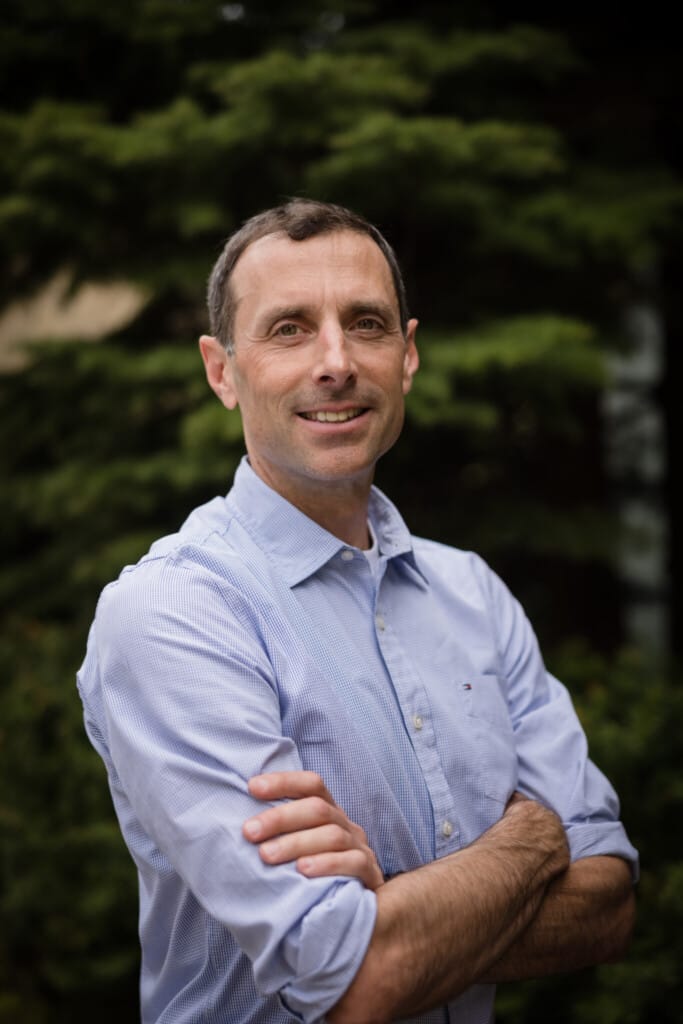
After more than two decades with the Resort Municipality of Whistler, one of the organizations longest standing leaders is retiring. Since joining the RMOW in 2004, Ted Battiston has worn many hats (not counting a stint as a fitness instructor at MPSC in the 90’s). He has been the Corporate and Community Energy Manager, the Sustainability Coordinator, the Manager of Climate and Environment, General Manager of Corporate Services and Public Safety and, most recently, the big one: Chief Administrative Officer (our top position). This means that over the course of his time here, he’s helped shape some of the municipality’s most significant initiatives, including sustainability planning, affordable housing, climate action and community infrastructure.
As he prepares for his next chapter, Ted reflects on the winding path that brought him to Whistler, the projects that mattered most, and the lessons he’s learned along the way.
The following interview has been edited for length and clarity.
When did you first come to Whistler, and why?
I came to Whistler in 1994. I was doing a master’s degree at SFU at the time but decided to take a bit of time off. I had lost a close friend and wanted to get to the mountains and figure out what would be next.
Then, like a lot of people that who move here, I thought, “This place is great. I think I’ll stay for a little longer.”
I worked in hospitality, serving tables, working late nights. My first job, I was as a doorman at the Boot Pub. I worked in a lot of restaurants before I shifted to more professional work, designing ski resorts and backcountry operations. That ultimately provided the opportunity to move over and do work with the municipality through the Whistler2020 project.
I guess that need for a break and some perspective actually took a decade to get out of my system.
Tell me about your career before the RMOW. What was your background?
It was quite different, actually. My first undergraduate degree was in physiology and biomechanics, and I was working in a human factors engineering lab doing human-computer interaction work. I’m not sure exactly where I thought that was going, but I’d always been in sciences and math.
That changed after my time in Whistler.
I didn’t finish that master’s degree when I moved to Whistler, as my time here shifted things. I took off and did a year of volunteer work in Asia, India, Nepal and other places. That led to doing another master’s degree, this time in environmental planning. Whistler was one of the pivots that changed my focus from pure science to more environment and climate.
Local government was never part of the plan, which is why I’ve often joked that nobody was more surprised than me when I found myself building a 20-plus-year career in municipal government.

Photo: Oisin McHugh/RMOW
Why did you set your sights on the RMOW?
Watching the impact of Marla’s [Ted’s partner, Marla Zucht, General Manager of the Whistler Housing Authority] work changed my perspective. At dinner, I’d talk about the projects I was working on in the ski world. We’d spend five or 10 minutes discussing them, and then we’d spend the rest of the evening talking about her day.
She was working on projects that directly affected our friends and neighbours, helping open new buildings, helping people we knew get houses and be able to live in Whistler and call this place home.
When the opportunity to work on Whistler 2020 came up, I jumped at it. I wanted my work to have meaning and impact in the community where I lived. I’ve never lost sight of the fact that what we do matters to the people around us.
What moments stand out from your time with the RMOW?
It’s really hard not to start with the 2010 Games.
We were working long hours, volunteering long hours on top of that, and then going to events. The village felt like a great big living room. I remember sitting on the Citta patio at 11 o’clock at night. There were three or four different Olympic medals sitting on tables around us, and the patio was full with folks from all different countries and events, everyone sharing stories and celebrating together. It was Whistler at its best.
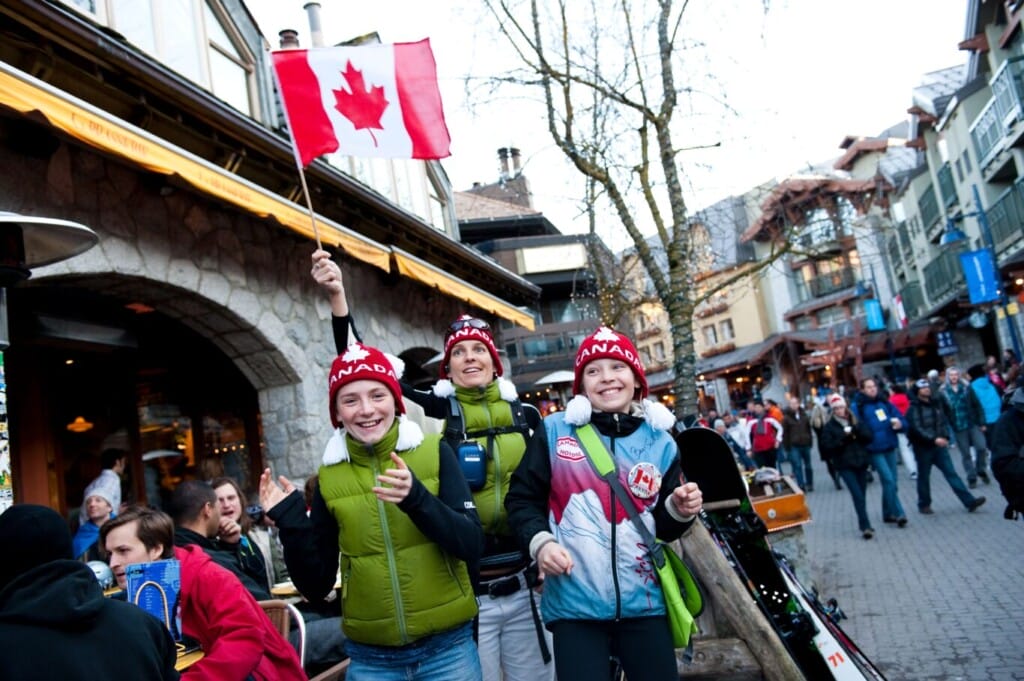
2010 Olympic and Paralympic Games in Whistler Village. Photo: Destination BC/Kevin Arnold
Beyond the Games, there are projects that stand out because they’ve left a lasting impact.
I helped establish some of the municipality’s early climate action and greenhouse gas reduction work. I led the project that installed the geo-exchange and solar systems at MPSC [Meadow Park Sports Centre], which continues to generate significant operational savings today.
Another project that stands out is the full redesign of Whistler’s public wayfinding and signage systems. It’s one of those things residents see every day without necessarily thinking about it, but it’s become part of the community experience.
On that note, what have been some of the most meaningful projects you’ve worked on?
Affordable housing is probably the one that rises to the top.
The RMOW has been central to enabling and getting those projects off the ground. Being able to get tourism to support housing, and the work we did to use MRDT [Municipal and Regional District Tax] and hotel tax money to make housing possible, feels like a pretty important thing.
Housing is foundational. It’s what allows people to build lives, raise families and become part of this community. That feels powerful.
Knowing that future generations will continue to benefit from policies and funding structures that we helped establish is something I’m really proud of.

Houses in Cheakamus Crossing. Photo: Justa Jeskova
How has your experience as a cyclist and coach influenced your approach to leadership?
There are two parts to that.
The first is understanding that meaningful results take effort. I’ve always been competitive, and I’m motivated by achieving outcomes. Endurance sports teach you that success rarely happens without hard work, consistency and commitment.
The second part comes from coaching.
I’ve coached cycling for more than 15 years, and coaching changes your perspective. It’s less about your own performance and more about helping others succeed.
There’s something deeply rewarding about mentoring, sharing knowledge and supporting people as they develop. That mindset has strongly influenced how I’ve approached leadership throughout my career.
You came to the RMOW looking for meaning and impact. Do you think you found it?
Absolutely.
There are hard days and frustrating moments in any career, but when I look back on the work we’ve done, particularly around affordable housing, it means something. Helping people move into their forever home in Whistler and finding a way to raise a family here feels rewarding, and important.
What do you hope your legacy will be?
I hope people remember that I worked hard, upheld high standards and approached my roles with integrity. I’ve always viewed local government as a privilege, and public funds as something we are entrusted to steward responsibly. I hope I’ve helped reinforce the importance of ethics, accountability and public service, and that those values continue to influence the organization long after I’m gone.
When you think about Whistler’s future, what excites you most?
We are growing as a community and need to grow into new facilities, so I’m quite excited about the 30-year facilities strategy. I think there’s some exciting pieces in there.
I also think it will be exciting to see how infill housing and density shape some of our existing neighbourhoods, helping people live closer to where they work and play.
What’s next for you?
I’m looking forward to having more time for me, more time for cycling, coaching and sharing that with other folks.
I’ll work less, but I’ll probably stumble into some new opportunities, maybe some consulting.
What excites me most is that I don’t know exactly what’s next, or what 2027 looks like. Having the opportunity to say “yes” to new experiences feels pretty awesome.