
Goal: By 2030, reduce waste sector emissions by 95 per cent and reduce embodied emissions from products and services.
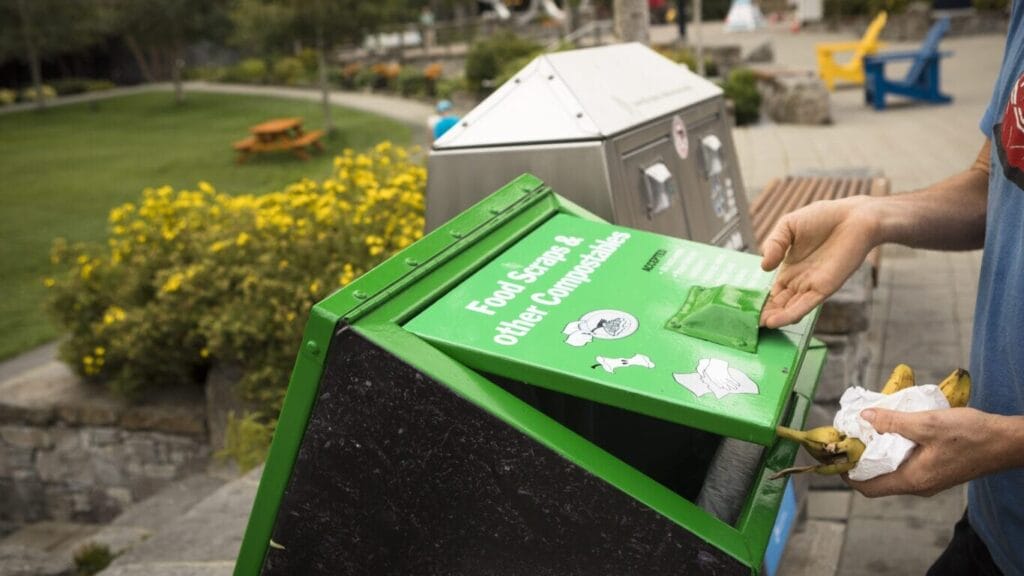
Whistler has already reduced waste-related emissions by 90 per cent since 2005. This is due to projects like landfill gas capture, recycling programs, and the introduction of organics composting. But there’s still much more to do. The waste sector represents one of the largest Greenhouse Gas (GHG) emitters in BC. In Whistler, much of that comes from food and organic waste that ends up in the landfill, where it breaks down and releases methane, a potent GHG. Together, we can reduce emissions and the environmental footprint of our daily choices, from what we consume to how we dispose of it.
What we’re doing
- Increase organic waste capture from commercial operations and multi-unit residential buildings.
- Reduce all streams of waste.
- Use low-carbon fuels in waste-related transportation.
- Demonstrate RMOW leadership by embedding GHG emissions considerations into municipal procurement practices.
- Engage with residents, visitors and local businesses to advance sustainable consumption principles.
Small actions you can take
- Separate your food scraps and use your green bin. Even small bits make a big difference.
- Recycle right. Learn what goes where and keep your bins clean and sorted.
- Choose to repair or reuse before buying new. Shop secondhand when possible.
- Say no to single-use. Carry a reusable bag, water bottle, and containers when you’re out.
- Plan ahead for renovations. Ask your contractor about recycling and reusing construction materials.
- Reduce food waste by meal planning, buying only what you need, and storing food properly.
- Support businesses that offer low-waste, circular, or refill-based products.
- Participate in Whistler’s reusables program.
Did you know?
- Whistler’s organics composting program now diverts about 30 per cent of local waste.
Meeting the target: If successful, improving organic waste capture and reuse/recycle programs will further reduce GHG emissions between 1,145 and 2,000 tonnes of carbon dioxide equivalent by 2030, or between 1 per cent and 2 per cent below 2019 levels. (Note: this target only takes into account direct emissions from waste management and not sustainable consumption.)
RMOW divisions and key partners
Lead: Infrastructure Services
Support: Climate and Environment, Facility Construction Management, Corporate and Community Services
Partnerships: BC Government, AWARE