Living with Bears in Whistler
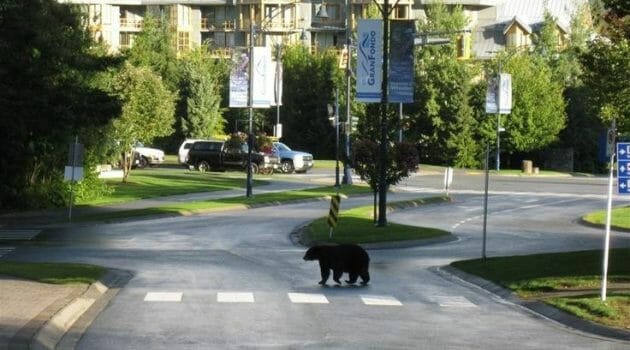
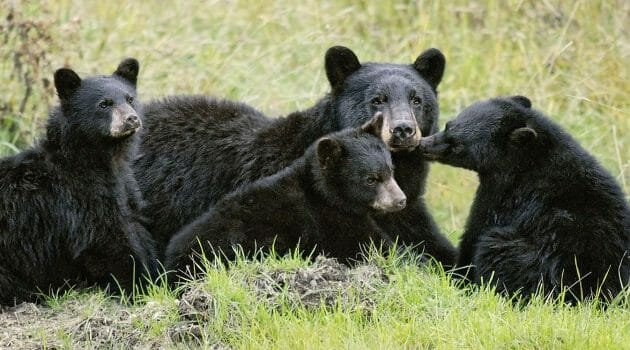
Whistler is home to 9,824 residents, more than two million annual visitors, and about 100 black bears. The Resort Municipality of Whistler (RMOW) is actively engaged in reducing human-bear conflicts through partnership with the key organizations that form the Whistler Bear Working Group.

Whistler Bear Working Group
In 2002, the multi-agency Whistler Bear Working Group (BWG) was founded. The core membership includes the RMOW, the Get Bear Smart Society, British Columbia’s Ministry of Environment and Conservation Officer Service (COS), Whistler Blackcomb, Carney’s Waste Systems, and the Royal Canadian Mounted Police. Additional members, as they are needed or available, also participate, such as the BC Conservation Foundation’s Bear Aware coordinator and community volunteers.
Bear Smart Community
After ten years of dedicated efforts to implement bear smart practices within the community, the RMOW has officially received Bear Smart Community status from the Ministry of Environment.
Whistler now joins three other B.C. communities that have achieved this designation, including the Village of Lions Bay, Squamish, and Kamloops.
The Bear Smart Community program is a voluntary, preventative conservation program designed by the Ministry of Environment in partnership with the British Columbia Conservation Foundation and the Union of British Columbia Municipalities.
Whistler’s road to becoming a Bear Smart Community has taken over a decade and has involved many partners. In 1995, the grassroots Get Bear Smart Society was established with a mandate to ensure that people and bears safely and respectfully coexist within the community. From there the Whistler Black Bear Task Team was established in 1997 and developed the first black bear management plan the following year.
In 2002, the multi-agency Whistler Bear Working Group was established. The group includes representatives from the RMOW, the Get Bear Smart Society, British Columbia’s Ministry of Environment and Conservation Officer Service (COS), Whistler-Blackcomb, Carney’s Waste Systems, and the Royal Canadian Mounted Police (RCMP). Additional members, as they are needed or available, also participate such as the BC Conservation Foundation’s Bear Aware coordinator and community volunteers.
Whistler is committed to incorporating long-term bear smart practices into the community’s waste infrastructure, educational programs and residents’ lifestyles. This is a community-driven initiative that will require continuous and cooperative efforts to further reduce human-bear conflicts.
New bear food plant list and communications protocol introduced
The RMOW is actively engaged in reducing human-bear conflicts through partnership with the key organizations that form the Whistler Bear Working Group.
During the January 8 council meeting, municipal staff presented recommendations, which were supported by municipal council, to include several plants on a bear plant list. These plants, which act as bear attractants, include Sorbus aucuparia (Mountain Ash, single stem tree), Sorbus sitchensis (Mountain Ash, shrub, multi-stem), Vaccinium (blueberries & huckleberries) and clover. These plants will no longer be approved for landscape plans that require municipal approval.
During the meeting, council also endorsed a communication protocol for the Whistler Bear Working Group and provincial Conservation Officer Service to follow when contacting properties about landscape plants to reduce the wildlife attractant risk related to landscape plants.
The new plant list and communications protocol support the municipality’s Garbage Disposal and Wildlife Attractant Bylaw, No. 1861 (2008) and the Official Community Plan policy 6.2.3.1. New guidelines apply to landscape plans requiring municipal approval and will not be enforced retroactively unless a problem arises.
Bear Viewing Guidelines
Seeing bears in their natural habitat is an exciting and memorable experience. It is however important to ensure the experience does not disturb bears while they are eating, mating or rearing their young. Done right, encountering bears can provide teaching moments to engender an ethic of respect and appreciation for bears, other wildlife and the natural environment.
Brochures are available through the Get Bear Smart Society. Email them at info@bearsmart.com for copies. Here are some points to mention and ways of behaving that embody the ethic of respect that will keep people and bears safe.
-
Visitors should always be encouraged to use a professional bear viewing guide or participate in a group tour.
-
It is recommended to bring along and use binoculars or spotting scopes and long telephoto lenses for taking photos. Flash photography should be avoided as it can disturb bears.
-
If residents or visiotrs come upon roadside bears, especially on highway 99, it is recommended not to stop and stay inside your vehicle.
Other tips:
-
Maintain a generous distance between you (or your vehicle) and the bear. The standard distance is 100 metres / yards (about the length of 7 school buses); but this distance should be adjusted based on the cues provided by bears themselves. If the bear is disturbed by the person’s presence, they should be encouraged to increase that distance. If a bear approaches the vehicle closer than 100 m, then it may be alright to stay and enjoy the viewing session. If the bear is feeding beside the vehicle, it’s time to move on.
-
If people do stop on a roadside, it is important that they remain in their vehicle and view bears through the window. This keeps guests safe and will minimize disturbance to bears.
-
Do not to call out or whistle to attract the bear’s attention for a photo. In fact, all noises or actions that might stress bears should be avoided (loud talking and laughing, children crying, diesel engines).
-
If you encounter bears on foot, follow these tips to keep safe and avoid disturbing bears:
-
Do not approach, feed or call out to bears.
-
Groups should stay together and not crowd or surround bears.
-
People should keep movements and sounds to an absolute minimum. This is imperative for keeping bears wild.
-
Viewing moments should be kept short and then people should leave the area and bears in peace.
-
-
If others are viewing bears in the same area simultaneously, be aware of the combined impact of the groups on the bears being viewed and to modify their behaviour accordingly. This might mean leaving the area and even asking others to do the same.
Questions? Please contact Sylvia Dolson, Executive Director of the Get Bear Smart Society, sdolson@bearsmart.com.
What to do if you see a bear?
If you see a bear, want to report bear attractants such as unsecured garbage, or learn more about bear proofing your home, call 604-905-BEAR (2327).
Need more information?